

Praxis AI ⭐ Verified
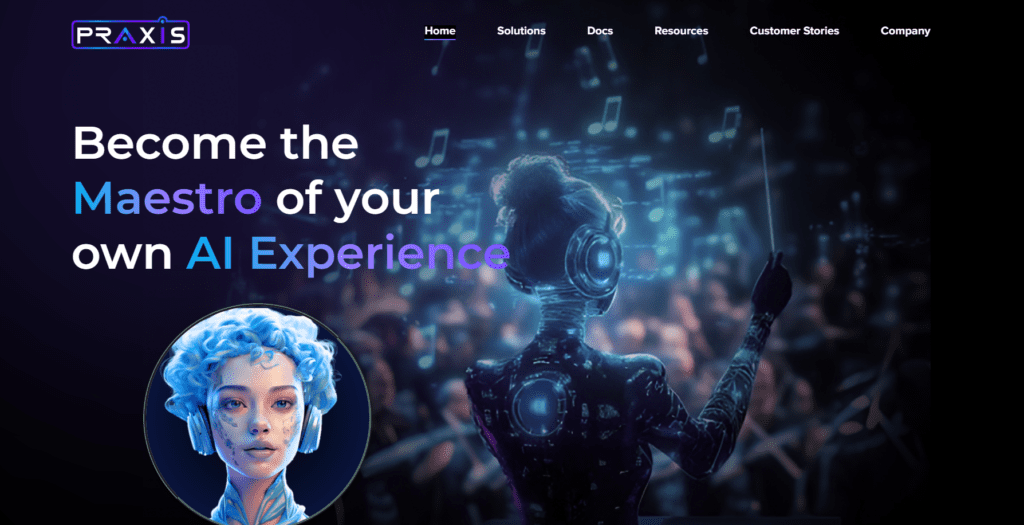
What is Praxis AI?
Praxis AI is an AI middleware orchestration platform that helps organizations capture, preserve, and scale real human expertise into digital twin agents. It offers a personalized AI assistant that can answer questions, coach learners, automate workflows, and provide 24/7 domain-specific support. Moreover, these digital twins are trained on a company’s own documents, policies, and subject matter, ensuring responses are contextual, accurate, and aligned with internal standards rather than generic LLM responses. Praxis supports integration with existing systems, offers enterprise-grade security (including SOC 2 compliance and encrypted IP vaults), and emphasizes ethical AI deployment grounded in privacy and data governance.
Review Summary
| Performance Score | A |
| Content Quality | Excellent |
| Interface | Professional |
| Ai Technology | AI digital twin agents, RAG, AI multimodal support, Secure infrastructure |
| Purpose | Scaling Expertise, personalized guidance, workflow support, and corporate learning |
| Compatibility | Web-based, API, LMS integrations, embedded assistants |
| Pricing Summary | Custom |
Praxis AI Key Features
| 1 | AI Digita Twin Agents |
| 2 | 24/7 expert assistance |
| 3 | Custom Knowledge of Indexing |
| 4 | Secure IP Vault |
| 5 | Enterprise integration |
| 6 | RAG-driven accuracy |
| 7 | Scalable learning |
| 8 | Usage Flexibility |
| 9 | Multimodal support |
| 10 | Data Governance & Compliance |
Who is Best for Using Praxis AI?
Explore Praxis AI, a middleware platform that turns human expertise into scalable digital twin agents for learning, enterprise automation, and 24/7 expert support.
Is Praxis AI Free?
Praxis AI is a paid tool. Pricing starts at Contact for Pricing
Pros & Cons
Pros
- Turns human expertise into scalable digital assistants.
- Preserves institutional knowledge with secure IP vault technology.
- Personalized 24/7 support for learners, employees, and customers.
- RAG grounding reduces hallucinations and improves accuracy.
- Integrates with existing enterprise and learning systems.
Cons
- A credit-based model may require careful budgeting for high usage.
- Enterprise customization may need technical support.
- Steeper onboarding for non-technical organizations.
- The main focus is on large institutions