Journalism in 2026 runs on speed, accuracy, and trust. All three are under constant pressure from shrinking deadlines, expanding information volumes, and multi-platform publishing demands. Covering text, audio, video, and social platforms using only manual effort is no longer realistic for most newsrooms.
That’s why AI tools for journalists have quietly become part of everyday newsroom operations.
For accuracy, transparency, and editorial control, AI-powered tools for journalists are accelerating productivity. In this guide, you’ll find the best AI tools for journalists in 2026, selected based on real newsroom use, reliability, and ethical fit.
Experts at Daily AI tools will show you how these tools improve research, reporting, content production, and verification and where journalists should still draw the line.

What Are AI Tools for Journalists?
AI tools for journalists are software powered by artificial intelligence that support research, writing, verification, and publishing. They accelerate journalism workflows and help journalists keep up with the pace of current content. Reporters maintain control over accuracy, context, and editorial decisions.
AI tools for journalists are built to support newsroom work. They use artificial intelligence to handle repetitive, time-consuming tasks, freeing reporters to focus on reporting, investigation, and storytelling.
In real journalism workflows, AI news tools are commonly used for:
Research speed
Scanning large documents, transcripts, and datasets to surface relevant information quickly.
Drafting support
Assisting with outlines, summaries, clarity edits, and structure while preserving the journalist’s voice.
Fact verification
Cross-checking claims, flagging inconsistencies, and reducing the risk of publishing misinformation.
Multimedia production
Creating images, charts, audio clips, and short videos for digital-first news publishing.
Publishing workflows
Streamlining content preparation across websites, newsletters, and social platforms without bypassing editorial review.
Used responsibly, artificial intelligence strengthens journalism workflows rather than replacing them. Journalists remain the final authority, while AI functions as a practical assistant that improves efficiency, accuracy, and production speed in modern newsrooms.
Why Journalists Are Using AI
Journalists use AI to reduce time spent on research, transcription, and verification, so they can focus on accuracy, storytelling, and meeting fast-moving deadlines without sacrificing editorial standards.
Modern newsrooms operate under constant pressure. AI is adopted not for creativity replacement, but for workflow relief where human time is most strained.
Key pain points driving adoption include:
Endless data to sift through
Investigative reporting often involves reviewing long reports, interviews, and public records. AI helps surface relevant information faster without skipping source review.
Tight deadlines
News cycles move quickly. AI assists with drafting support, summarization, and transcription to speed up production while journalists retain final control.
Verification pressure
Journalists face high accountability for accuracy. AI tools assist with cross-referencing claims, but every output still requires human verification.
Misinformation risks
The spread of manipulated content increases the need for faster fact-checking and source verification, with AI providing support.
Multiformat publishing needs
Reporters now publish across text, audio, video, and social platforms. AI helps repurpose content without rewriting from scratch.
What Categories of AI Tools Journalists Should Know
Not every AI tool serves the same purpose. Journalists get real value when they match the right AI capability to the right newsroom task. These tasks include research, drafting, verification, production, or audience analysis.
Below are the core AI tool categories journalists currently use, mapped to real workflows and solutions.
AI Research & Fact-Checking Tools
These tools support source discovery, claim verification, and contextual research, especially when time is limited.
What they’re used for
- Cross-checking facts across multiple sources
- Extracting key insights from long documents
- Locating credible references and citations
Examples
Solution
They reduce research time while improving accuracy, helping journalists verify information faster without skipping editorial review.
AI Writing & Drafting Assistants
Writing tools assist during early-stage content creation, not final publishing.
What they’re used for
- Brainstorming story angles
- Structuring outlines
- Drafting initial versions or paraphrasing text
Examples
- ChatGPT
- Jasper
- QuillBot
Solution
They help journalists move past writer’s block and speed up drafting, while final tone, facts, and framing remain human-controlled.
Transcription, Audio & Multimedia Tools
These tools support interview processing and multimedia production, now essential in modern journalism.
What they’re used for
- Converting interviews and press briefings into text
- Editing podcasts and audio clips
- Producing short videos and visual explainers
Examples
- Otter.ai
- Descript
- Synthesia
Solution
They eliminate hours of manual transcription and simplify audio or video editing, enabling faster cross-format publishing.
Verification & Deepfake Detection Tools
As manipulated media increases, verification tools help protect journalistic credibility.
What they’re used for
Examples
- Reality Defender
- Multimodal detection systems
Solution
They reduce the risk of publishing manipulated content, supporting newsroom integrity while still requiring human confirmation.
Audience, Trend & Social Intelligence Tools
These tools help journalists understand what matters now and how stories resonate.
What they’re used for
- Tracking breaking news trends
- Monitoring audience sentiment
- Identifying viral or emerging topics
Examples
- Pulsar
- NewsWhip
Solution
They help journalists prioritise relevant stories and respond to audience signals without chasing unreliable engagement metrics.
Top AI Tools for Journalists in 2026

Journalists use AI tools to accelerate their workflows. The most trusted tools support research, drafting, verification, transcription, and audience analysis.
Below is a curated list of the most widely adopted and newsroom-relevant AI tools, reviewed for real-world journalism use.
Quick Comparison: Best AI Tools for Journalists
| Tools | Primary Use | Best For | Editorial Risk |
| Perplexity AI | Research & Citations | Fact Checking | Low |
| ChatGPT | Drafting & Ideation | Outlines, prep | Medium |
| Jasper AI | Long-form writing | Structured stories | Medium |
| Grammarly | Editing & Tone | Headline, clarity | Low |
| Otter.ai | Transcription | Interviews | Low |
| Descript | Multimedia editing | Podcast, video | Low |
| Synthesia | Video Creation | Visual explainers | Medium |
| Pulsar/Newswhip | Trend Intelligence | Story Planning | Low |
| RealityDefender | Media Verification | Deepfake Checks | Low |
Perplexity – AI-Powered Research & Verified Answers
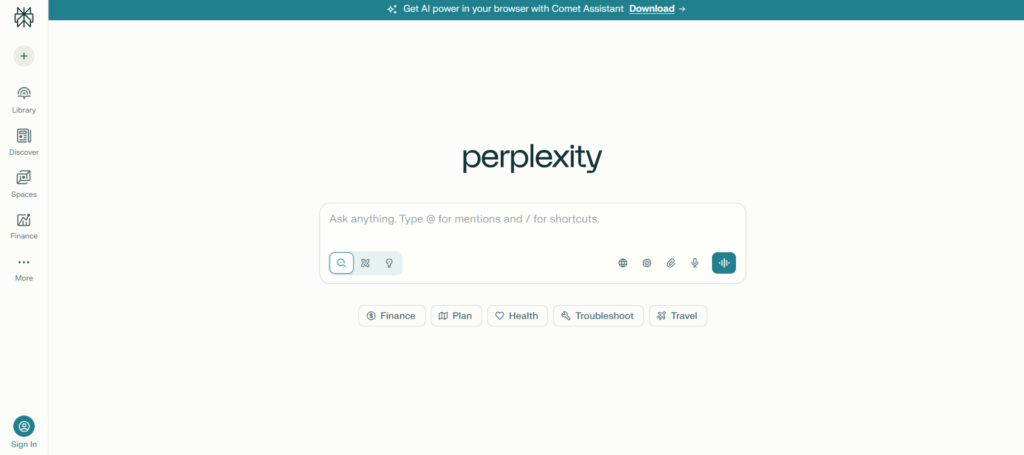
Best at: Fast research with cited sources
Best use case: Fact checking, background research, context gathering
Perplexity functions as an AI research assistant, returning answers alongside source citations. Journalists use it to validate claims, surface references, and quickly understand complex topics without digging through dozens of links.
Key strengths
- Source-linked responses
- Real-time information retrieval
- Clean, research-focused interface
Limitations
- Sources still require human evaluation & primary source confirmation
- Not a replacement for primary reporting
Editorial confidence: High
Pricing: Free limited access with a starting price of $20/Month
ChatGPT – Versatile Drafting & Research Support
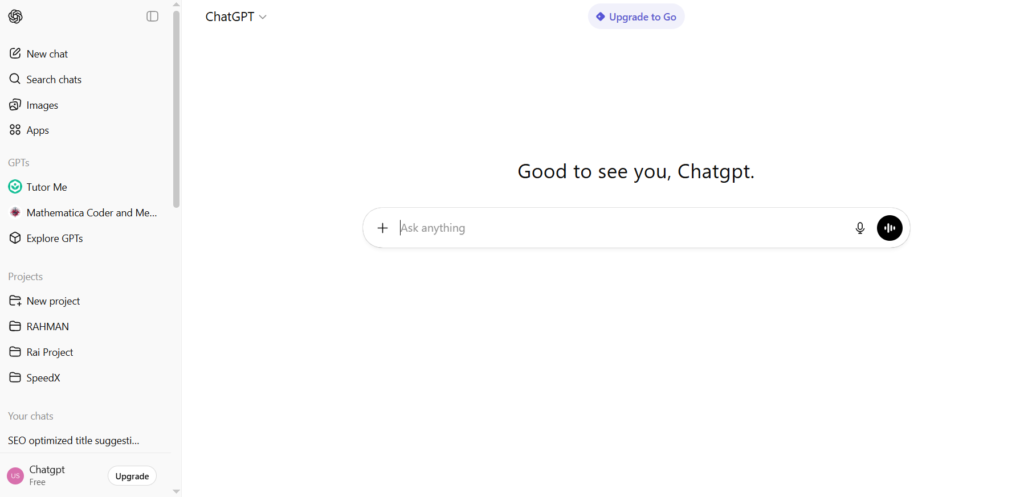
Best at: Idea generation, summaries, interview prep
Best use case: First drafts, outlines, framing questions
ChatGPT is widely used in newsrooms for non-publishable drafting support. Journalists rely on it to structure articles, summarise documents, brainstorm angles, and prepare interview questions under tight deadlines.
Key strengths
- Flexible writing styles
- Strong summarization
- Useful for pre-reporting workflows
Limitations
- Can generate inaccuracies without source grounding or human review
- Requires strict editorial review
Editorial confidence: Medium
Pricing: Free access with limited prompts. Plan starts from $8month
Jasper AI – Structured Long-Form & SEO Writing
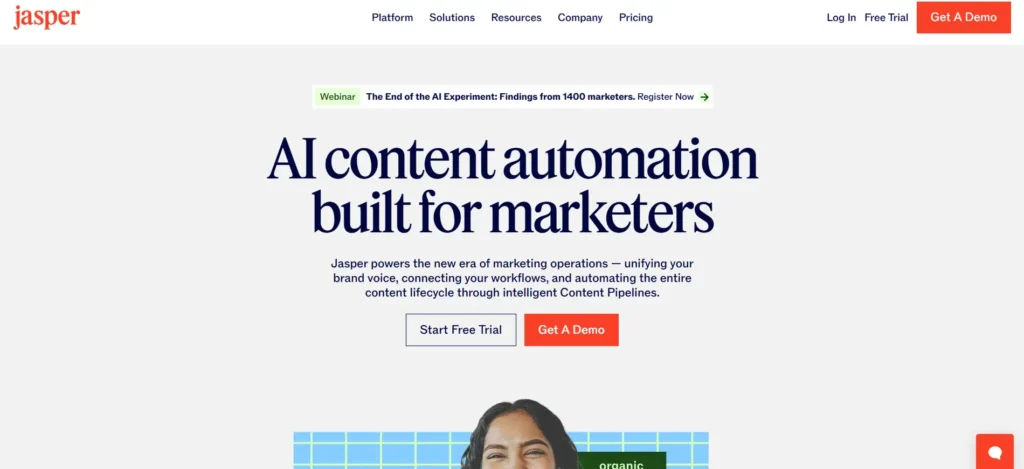
Best at: Long-form structure and narrative flow
Best use case: Feature stories, explainers, evergreen content
Jasper is designed for structured writing, helping journalists organise long articles with a consistent tone and logical progression. It’s often used for background pieces rather than breaking news.
Key strengths
- Template-based workflows
- SEO-aware structure
- Helpful for consistency
Limitations
- Less flexible for investigative writing
- Requires strong prompts & editorial oversight
Editorial confidence: Medium
Pricing: Free trial with a plan starting from $69/Month for one seat.
Grammarly & GrammarlyGO – Grammar, Tone, Clarity

Best at: Editing, tone refinement, readability
Best use case: Headlines, final drafts, newsroom QA
Grammarly is one of the most trusted editorial tools in journalism. It helps journalists improve clarity, reduce errors, and align tone with publication standards.
Key strengths
- Grammar and clarity checks
- Tone adjustments
- Widely adopted in professional newsrooms
Limitations
- Does not assess factual accuracy
Editorial confidence: High
Pricing: Free limited access with plans starting from $12/Month
Otter.ai – Real-Time Transcription & Summaries

Best at: Interview transcription
Best use case: Press events, interviews, meetings
Otter.ai saves journalists hours by turning spoken interviews into searchable transcripts with speaker identification, making follow-ups and quoting faster.
Key strengths
- Real-time transcription
- Speaker labeling
- Easy search and export
Limitations
- Accuracy drops with poor audio
Editorial confidence: High
Pricing: Free basic access with plans starting from $8.33/Month/User
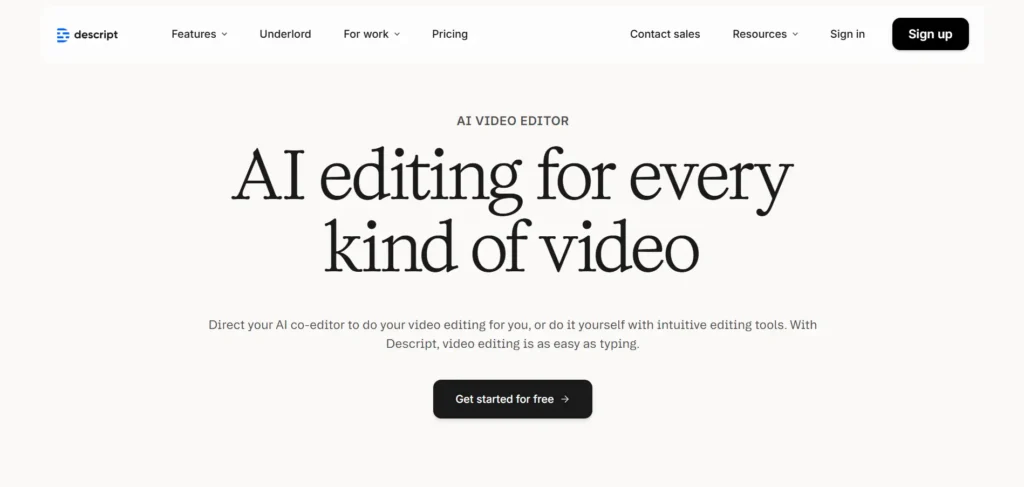
Descript – Multimedia Editing & Transcript-First Editing
Best at: Podcast and video editing
Best use case: Audio interviews, newsroom multimedia
Descript allows journalists to edit audio and video by editing text. It’s widely used for podcasts, interviews, and short-form video content.
Key strengths
- Transcript-based editing
- Filler-word removal
- Screen recording and overdub
Limitations
- Learning curve for new users
Editorial confidence: High
Pricing: Paid with plans starting from $24/Month
Synthesia – AI Video Storytelling

Best at: Turning text into video
Best use case: Explainer videos, social content
Synthesia helps newsrooms convert written stories into visual explainers, particularly for social media and audience engagement.
Key strengths
- Fast video creation
- No filming required
- Scalable visual output
Limitations
- Not suitable for investigative reporting
Editorial confidence: Medium
Pricing: Free basic with starter plan from $18/Month
Pulsar – Audience Intelligence & Cultural Insight

Best at: Deep audience analysis and cultural trend mapping
Best use case: Understanding why topics gain traction and how narratives spread
Journalists and editorial teams use Pulsar to analyse audience behavior, sentiment, and cultural signals across social platforms. Rather than focusing solely on viral spikes, this approach helps newsrooms understand the context and motivations behind engagement.
Key strengths
- Audience segmentation and sentiment analysis
- Cultural and narrative trend mapping
- Cross-platform social intelligence
Limitations
- Best suited for analysis, not breaking news detection
- Requires editorial interpretation to avoid over-reliance on data
Editorial confidence: High
Pricing: Custom Pricing
NewsWhip – Real-Time Trend & Media Monitoring

Best at: Early detection of breaking stories and viral news
Best use case: Story prioritisation and real-time editorial decisions
NewsWhip is designed for speed and visibility, tracking how stories perform across news sites and social media in real time. Journalists and editors use it to identify emerging stories before they peak, helping newsrooms act faster.
Key strengths
- Real-time story tracking
- Engagement and velocity analysis
- Competitive media monitoring
Limitations
- Focuses on momentum, not content quality
- Engagement metrics should inform, not override editorial judgment
Editorial confidence: High
Pricing: Free Chrome extension and Custom Pricing plans on Call!
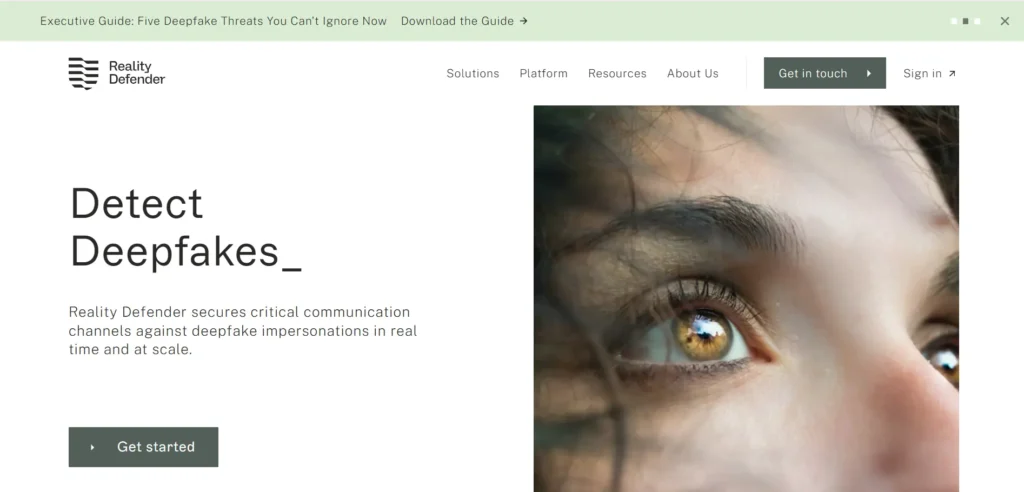
RealityDefender – Deepfake & Media Manipulation Detection
Best at: Detecting synthetic or altered media
Best use case: Verification of images, audio, and video
RealityDefender is increasingly used to protect against deepfakes and manipulated content, supporting newsroom credibility.
Key strengths
- Multimodal detection
- Designed for journalists and investigators
Limitations
- Detection tools must evolve with threats
Editorial confidence: High
Pricing: Custom
Editorial Note
Not every newsroom needs all the tools. Effective journalists select AI tools based on their beats, deadlines, and standards, using AI to support responsible reporting.
How to Choose the Right AI Tool for Your Workflow
Choosing the right AI tool for your newsroom depends on what task you need solved, how fast you need it done, and how it fits with your existing systems and standards.
Below is a clear checklist that journalists and editors can use to make quick, confident decisions.
Task You’re Solving
Match the tool to the specific job:
- Breaking news: Tools that speed up research and summarization (e.g., Perplexity, news trend monitors)
- Long features: Drafting and organizational aids (e.g., structured writing tools like Jasper)
- Investigative reporting: Verification, document search, deep analysis (tools with strong citation chains and newsroom review workflows)
Speed vs. Accuracy Tradeoff
Decide what matters most for the story:
- Immediate updates: Speedy outputs with supervised editorial oversight
- In-depth accuracy: Slower, more reviewable methods with clear source logs
Journalism standards require human verification of AI outputs to avoid fact errors and misinterpretations.
Integration With Newsroom Tech
Ensure the tool integrates with your workflow:
- CMS platforms
- Editorial calendars
- Shared research databases
Tools that sync with existing systems reduce friction and data silos.
Budget & Team Size
Match pricing to newsroom resources:
- Small/local outlets: Free or low-cost transcription and summarization tools
- Larger newsrooms: Enterprise solutions with compliance, training, and data controls
Training and support for staff should be part of the cost calculation.
- Data Privacy & Content Ownership
Protect sources and unpublished material:
- Avoid uploading confidential interviews or whistleblower files to external AI services without explicit safeguards.
- Choose enterprise or self-hosted models that don’t retain or reuse newsroom data.
AI in the Newsroom: Benefits & Ethical Concerns
Some AI tools save hours of manual work, but they can also introduce factual errors, bias, or gaps in local news coverage if not carefully reviewed.
Benefits of AI in Newsrooms
- Efficiency gains: AI accelerates routine tasks such as transcription, summarization, and tagging.
- Coverage expansion: Tools can highlight under-reported topics and organise large datasets for deeper reporting.
- Editorial support: Hybrid systems (human + AI) accelerate workflows while keeping decision-making human.
Ethical Concerns Journalists Must Address
The following ethical concerns will guide you more on this:
Transparency & Labeling AI Output
Newsrooms often lack consistent policies on disclosing AI use. Simply stating AI involvement is insufficient; it must be contextual and transparent so audiences understand how the content was produced.
Risks of Hallucinations
AI systems can generate plausible but incorrect facts that appear authoritative without verification, a phenomenon known as hallucination. Human verification is essential to maintain accuracy and credibility.
Local Representation Bias
Training data may not reflect diverse regional perspectives, resulting in skewed coverage or the omission of minority voices. Editors must review outputs to ensure balanced and inclusive reporting.
Source Diversity & Accountability
AI doesn’t inherently evaluate source credibility or context. Journalists need to verify facts using a variety of primary sources. They must remember that AI-generated content should not substitute their critical judgment.
Editorial Reality
AI is widely used across newsrooms worldwide, but often inconsistently, and many journalists lack formal ethical guidelines and training. Creating clear policies, conducting regular reviews, and setting standards for AI use in the newsroom are essential. It will help maintain trust, accuracy, and editorial independence amid rapid technological advancements.
Real World Use Cases: Examples from Modern Newsrooms
In newsrooms around the world, AI tools are now practical helpers that solve real reporting challenges. The following are the concrete ways journalists are using AI today:
Rapid Press Briefing Transcription in Live Reporting
During fast-moving press briefings, reporters struggle to capture every detail while preparing questions or writing updates. Tools like Otter.ai and Descript convert spoken remarks into accurate, searchable text almost instantly. This allows reporters to focus on context and quotes rather than on manual transcription, accelerating publication and reducing the risk of missing critical information.
Automated Trend Tracking Before Editorial Meetings
Before editorial meetings, teams need to know what stories are gaining traction. Tools such as NewsWhip and Pulsar track real-time engagement patterns on news sites and social platforms, highlighting emerging topics across regions and communities. Editors can see data-driven signals and prioritize coverage based on audience activity and trend velocity.
Audience Sentiment Guiding Story Angles
Understanding how audiences feel about an issue shapes how stories are reported. Journalists use sentiment analysis features in AI tools to gauge public reaction to policies, events, or statements. When coupled with social listening platforms, this insight helps reporters refine angles, ask better questions, and align coverage with reader interests, all while avoiding biased assumptions.
These use cases demonstrate how AI in modern newsrooms augments. Journalists still verify facts, interpret context, and make editorial decisions, but AI speeds up the parts that used to slow them down.
Future of AI in Journalism (2027 & Beyond)
The next wave of AI in journalism is smarter, more integrated systems that embed ethical standards and human judgment into everyday reporting. Here’s what’s emerging.
Agent-Based Assistants in Editorial Work
Future newsroom tools will act like intelligent assistants. These agents will proactively suggest sources, flag outdated data, and organize research folders based on reporting beats. Rather than waiting for a query, they’ll anticipate needs, making the editorial process more fluid and less manual.
Automated Verification Workflows
Verification is a core journalistic responsibility, and AI will increasingly support it through automated checks that compare claims against trusted databases and source networks. Tools will produce verification reports with confidence scores and citation trails, but human editors will always hold the final say on credibility and context.
Deep Analytics & Narrative AI
Beyond basic summaries, narrative AI will help journalists identify patterns in complex data by highlighting correlations, anomalies, and potential angles. This supports investigative reporting and long-form features where data tells the story.
Emerging Standards for AI Transparency
As AI use becomes routine, journalism organizations are already drafting transparency standards. Reporters may need to disclose when AI contributed to research or drafting, how verification was handled, and what safeguards were used to prevent bias or misinformation. These standards will help audiences understand how a story was produced, strengthening trust in the media.
The future of AI in journalism is not automation without accountability, but assistance built around transparency, verification, and editorial control. Newsrooms that treat AI as infrastructure will preserve trust while moving faster.
FAQs
What is the best AI tool for journalists in 2026?
1. Perplexity excels at research and citation
2. Otter.ai handles transcription
3. Descript supports multimedia editing
4. NewsWhip and Pulsar guide trend decisions
The best choice depends on your workflow and editorial needs.