

Splunk ⭐ Verified
What is Splunk?
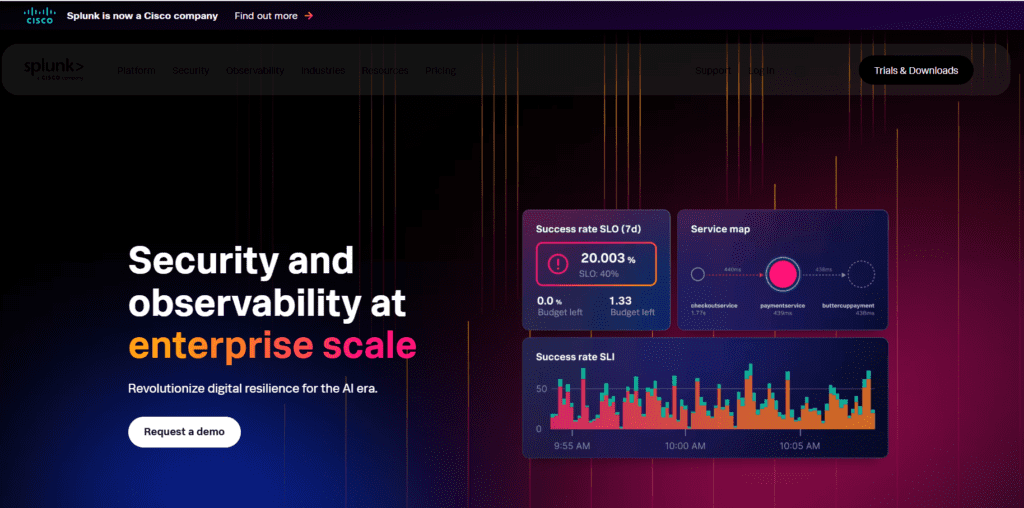
Splunk AI is an enterprise artificial intelligence platform that analyzes machine data, detects threats, and improves IT and security operations. It helps businesses monitor systems, identify anomalies, and automate incident response. Splunk AI uses advanced large language models (LLMs), machine learning, and predictive analytics in the Splunk ecosystem. These AI models make complex data analysis easier compared to traditional observability tools. The platform stands out for its unified approach that combines security, observability, and operational intelligence in a single environment. Splunk AI is best suited for cybersecurity analysts, DevOps engineers, and organizations managing large-scale infrastructure data.
Review Summary
| Performance Score | A |
| Content Quality | Produces accurate operational insights and intelligent data summaries. |
| Interface | An advanced but professional interface designed for technical workflows. |
| Ai Technology | Uses domain-specific LLMs, ML models, and predictive analytics engines. |
| Purpose | Security monitoring, observability, and operational intelligence automation. |
| Compatibility | Works across cloud, hybrid, and on-prem enterprise environments. |
| Pricing Summary | Enterprise subscription pricing based on infrastructure and usage scale. |
Splunk Key Features
| 1 | AI Assistant for natural-language query creation |
| 2 | Real-time anomaly detection |
| 3 | Automated incident investigation |
| 4 | Intelligent alert prioritization and noise reduction |
| 5 | Machine learning toolkit with custom model support |
| 6 | Data visualization dashboards |
| 7 | Integration with enterprise tools |
| 8 | Cloud platforms |
Who is Best for Using Splunk?
Splunk AI is an enterprise artificial intelligence platform that analyzes machine data, detects threats, and improves IT and security operations.
Is Splunk Free?
Splunk is a paid tool. Pricing starts at $15 per host/month
Pros & Cons
Pros
- Powerful AI-driven anomaly detection capabilities
- Handles massive enterprise datasets
- Natural language AI assistant simplifies queries
- Strong security and observability integration
- Highly customizable with extensible AI models
Cons
- Complex setup for beginners
- Pricing transparency is limited for enterprises
- Requires technical expertise to maximize value
- Resource-heavy for small teams
- Overkill for simple monitoring needs