

Elastic ⭐ Verified
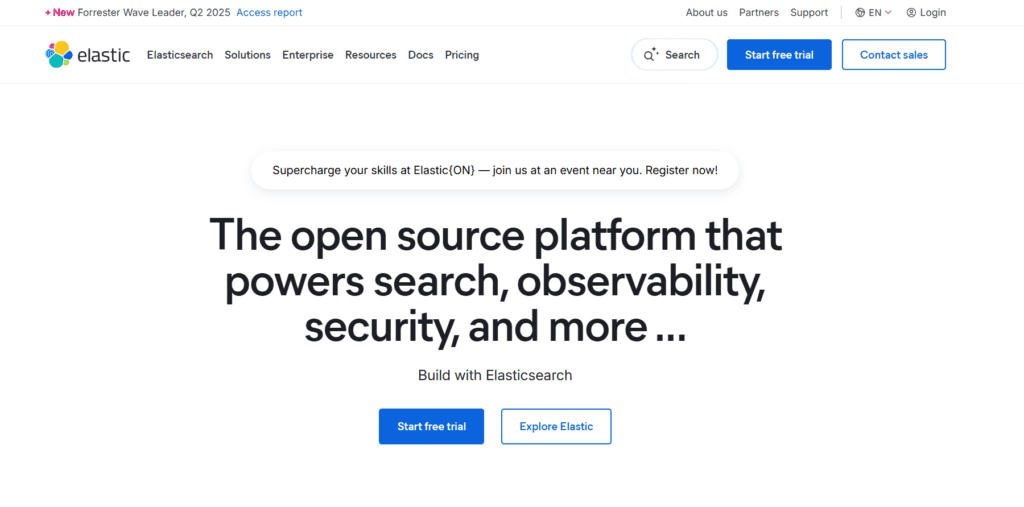
What is Elastic?
Elastic AI is a search AI platform that helps to analyze, search, secure, and observe massive datasets using artificial intelligence and real-time analytics. It helps organizations transform operational data into actionable insights. Elastic AI runs on Elasticsearch with built-in machine learning, vector search, and managed LLM integrations. These AI models enable semantic retrieval, hybrid search, anomaly detection, and AI assistants. Elastic stands out for combining search, security, and AI automation into a single ecosystem. The platform is best for enterprises, DevOps teams, cybersecurity analysts, and data engineers managing complex systems.
Review Summary
| Performance Score | A |
| Content Quality | Context-aware results powered by hybrid AI search |
| Interface | Technical yet powerful dashboard via Kibana |
| Ai Technology | Machine learning, managed LLMs, and AI inference services |
| Purpose | Enterprise search, observability, and AI security analytics |
| Compatibility | Multi-cloud and self-managed deployment support |
| Pricing Summary | Tiered monthly cloud pricing starting at $99/month |
Elastic Key Features
| 1 | AI-powered semantic and hybrid search |
| 2 | Vector database capabilities |
| 3 | Elastic AI Assistant with managed LLM |
| 4 | Anomaly detection |
| 5 | Real-time observability monitoring |
| 6 | AI-driven cybersecurity analytics |
| 7 | Cross-cluster search |
| 8 | Automation workflows |
Who is Best for Using Elastic?
Elastic AI is a search AI platform that helps to analyze, search, secure, and observe massive datasets using artificial intelligence and real-time analytics.
Is Elastic Free?
Elastic is a paid tool. Pricing starts at $99/month
Pros & Cons
Pros
- Extremely powerful enterprise AI search engine
- Real-time analytics with strong performance stability
- Built-in machine learning and AI assistant
- Multi-cloud deployment flexibility
- Scales efficiently with growing datasets
Cons
- Requires technical expertise to configure
- Pricing increases with usage scale
- Not ideal for non-technical users
- Advanced features are locked in higher tiers
- Initial setup complexity for small teams