AI tools for HR professionals automate resume screening, improve performance reviews, enhance employee engagement, and analyze employee data to support faster, more accurate workforce decisions.
If you lead HR today, you feel the pressure. You need to hire faster because talent pools are tighter. With AI on your side, your HR systems can analyse more data than your team can process.
AI combines the power of filtration and uniform workflow in HR systems. The technology at the core is behind automated recruiting, employee onboarding, and performance management.
Moreover, generative AI creates job descriptions, conversational AI powers chatbots, and data analytics predicts turnover, streamlines compliance, and improves employee engagement.
In this blog, you will learn what AI tools for HR professionals actually do, where they create measurable impact, and how to use them without adding complexity to your management platform.
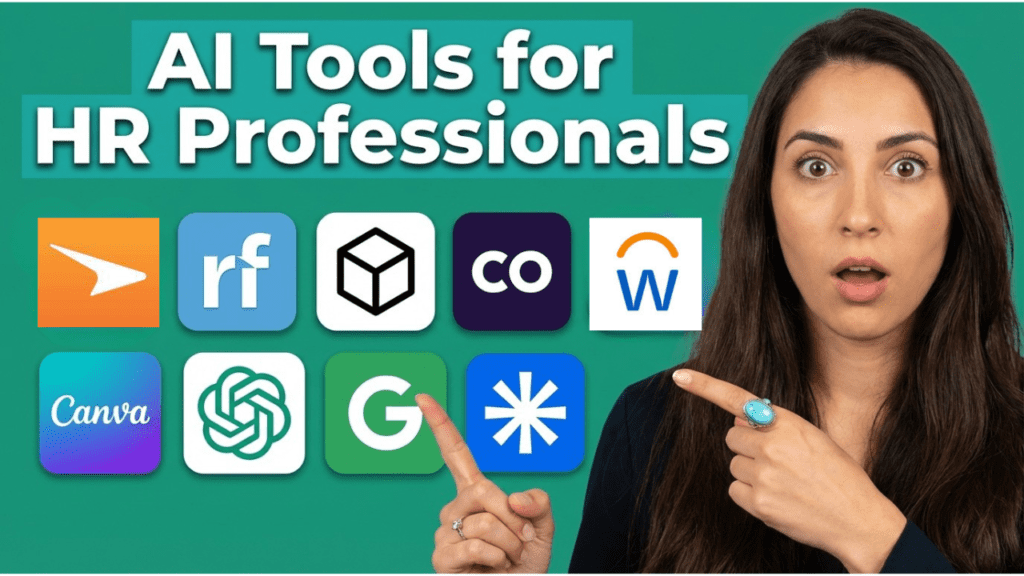
What Are AI Tools for HR Professionals?
AI tools for HR professionals are AI-powered systems that automate resume screening, improve performance reviews, strengthen employee engagement, and analyze employee data to inform smarter workforce decisions.
These tools support HR leaders in daily operations. They reduce repetitive tasks and highlight patterns in workforce data. They help HR managers act faster and with more confidence.
In simple terms, AI does the heavy lifting so HR can focus on people. HR People occasionally discuss that AI is replacing them, but that is not the case.
How Is AI Used by Human Resources Professionals Today?
AI tools solve operational bottlenecks across hiring, performance management, employee engagement, and HR operations. They are not intended to replace HR leaders.
The primary goal of AI integration is to reduce manual workload and surface patterns hidden in employee data. The following data will help you understand AI working in HR environments today:
Recruitment and Resume Screening
Hiring teams manage volume, but the time is limited. AI-based applicant tracking systems organize resumes using structured skill matching instead of simple keyword filters.
Examples of AI tools include:
- Workday AI, which ranks applicants based on role alignment and hiring criteria.
- Eightfold AI is known for skills intelligence and internal mobility mapping.
- HireVue, which supports structured digital interviews.
- Paradox, which automates interview scheduling through conversational assistants.
Use case:
Instead of manually reviewing hundreds of resumes, recruiters receive ranked shortlists aligned with job requirements. AI highlights relevant experience and flags gaps. HR professionals still make the final decision.
Important: AI can improve consistency, but oversight is essential to prevent bias.
Impact:
- Shorter hiring cycles
- Standardized evaluation
- Less administrative strain
Performance Reviews and Talent Development
Managers often struggle with time and structure during performance reviews. AI-assisted systems analyze goals, feedback trends, and historical performance to support clearer evaluations.
Examples:
- Lattice AI for structured feedback tracking.
- SAP SuccessFactors for enterprise performance management and succession planning.
- Visier for leadership and workforce analytics.
Use case:
Before a review meeting, a manager can view performance trends, missed milestones, and peer feedback summaries in a single view. The system suggests development themes. The manager reviews, edits, and delivers the feedback personally. AI supports preparation. It does not replace leadership conversations.
Results:
- More consistent performance reviews
- Clearer development plans
- Data-informed promotion decisions
Employee Engagement and Retention Analytics
Employee engagement drives retention, productivity, and cultural stability. AI analyzes engagement survey responses, written feedback, and workforce patterns to detect risk signals early.
Capabilities include:
- Sentiment analysis of employee comments
- Attrition prediction models
- Workforce risk modeling
- Automated survey pattern detection
Use case:
If engagement scores drop in a department and overtime increases, AI flags the risk before resignations rise. HR can intervene early.
Business impact:
- Reduced turnover costs
- Stronger culture insights
- Earlier burnout detection
- Smarter retention strategies
Artificial intelligence turns employee data into strategic foresight. For a broader view of how AI supports workforce intelligence, explore our guide on AI in Project Management.
HR Operations and Management Platforms
Administrative tasks consume HR capacity. To see how AI-powered systems are transforming business operations beyond HR, read our detailed guide on AI Tools for Entrepreneurs. Modern AI enhances the management platform by organizing employee data across payroll, compliance, and workforce planning.
Examples:
- BambooHR integrates automation across core HR operations.
- Paycor combines payroll, analytics, and compliance tracking.
Applications include:
- Payroll anomaly detection
- Compliance alert systems
- Workforce planning forecasts
- Benefits optimization analysis
Use case:
Instead of manually auditing payroll reports, AI flags inconsistencies before processing. HR teams correct issues early.
Outcome:
- Fewer payroll errors
- Stronger compliance control
- Better workforce visibility
- Improved operational efficiency
What do Generative AI tools do for HR Professionals?
Generative AI tools for HR create job descriptions, draft performance reviews, summarise employee feedback, and build development plans. These AI-powered HR systems use natural language models to support communication, documentation, and structured decision-making across human resources.
Generative AI does not replace HR judgment. It supports it. For HR leaders, this technology works as an AI solution that improves clarity, consistency, and speed across daily workflows. It enhances HR operations without adding technical complexity to your management platform.
The following examples will help you understand the use of Generative AI in present HR environments:
1. Job Descriptions and Candidate Communication
Hiring teams spend hours drafting and rewriting job descriptions. Generative AI can:
- Create structured job descriptions from role inputs
- Adjust tone for different seniority levels
- Suggest inclusive language
- Personalise candidate outreach emails
This improves speed and consistency in resume screening workflows. HR still reviews and approves every description before publishing. The result:
- Faster hiring cycles
- Clearer expectations
- Better candidate experience
2. Performance Reviews and Development Plans
Many managers struggle with writing balanced feedback. AI-based systems analyse goals, prior feedback, and role expectations to draft structured performance reviews. They can:
- Summarise quarterly feedback
- Identify recurring strengths
- Highlight performance gaps
- Draft personalized development plans
Managers refine the final review. AI prepares the structure. This strengthens performance management and supports data-driven decisions without removing human accountability.
3. Policy Drafting and Internal HR Messaging
HR departments regularly update policies and internal communication. Generative AI can:
- Draft policy revisions
- Simplify complex compliance language
- Structure onboarding guides
- Create internal announcements
This improves clarity across the employee experience. Legal and HR leaders must review all final documents. AI accelerates preparation, while HR managers make decisions.
4. Learning Path and Skill Development Support
When organisations focus on internal growth, structured learning matters. Generative AI can:
- Suggest learning paths based on skill gaps
- Draft action plans for career progression
- Align development plans with role requirements
- Recommend training themes from employee data
This helps HR enhance HR strategy with scalable development frameworks. Managers validate relevance before execution.
5. Engagement Feedback Summaries
Large employee engagement surveys generate large volumes of text. Generative AI analyses written comments and produces:
- Theme clustering
- Sentiment summaries
- Executive-ready reports
- Actionable insights
This enables HR leaders to move from raw data to strategic action more quickly.
Where Generative AI Adds Practical Value!
The following table is a quick way to understand the HR tasks, AI outputs, & HR responsibility:
| HR Tasks | AI Outputs | HR Responsibility |
| Job Descriptions | Structured Drafts | Review & Approval |
| Performance Reviews | Draft Summaries | Final Evaluation |
| Policy Updates | Document Framework | Compliance Validation |
| Development Plan | Skill-based outlines | Personalization |
| Engagement Reports | Thematic Summaries | Strategic action |
Generative AI improves speed and structure across human resources. It supports better communication and a more consistent employee experience. While the final workforce decisions are for the HR manager only.
Top 9 AI Tools for HR Professionals in 2026
There is no universal “best” system. Each tool solves a different HR problem. The right fit depends on your size, compliance needs, and existing infrastructure.
HR leaders often search for:
- Best AI tools for HR
- AI tools for recruitment
- AI performance management software
- AI for employee engagement analytics
- AI HR management platforms
Below is a categorized overview of leading AI tools for HR professionals. We are not ranking them, but these are the most widely used and best reviewed online.
Quick Comparison Table for HR Leaders
| AI Tools | Primary Focus | Best For | Integration Depth | Key Limitations |
| Workday AI | Enterprise recruiting & HCM | Large Enterprise | Deep Native Ecosystem | Complex Implementation |
| Eightfold AI | Skill Intelligence & Mobility | Skilled-based hiring orgs | Integrate with ATS | Requires Strong Data quality |
| HireVue | Digital Interviewing | High-volume hiring | ATS integrations | Limited beyond interviews |
| Paradox | Recruiting Automation | Volume hiring sectors | ATS-connected | Limited analytics |
| Lattice AI | Performance Management | Growing companies | HRIS Integration | Not a full HR suite |
| SAP SuccessFactors | Enterprise Talent & Planning | Global Enterprises | Deep SAP Integration | Resource-heavy setup |
| Visier | Workforce Analytics | Data-driven HR teams | Connects to HR systems | Analytics only |
| BambooHR | Core HR operations | SMBs | Broad integration | Limited Predictive AI |
| Paycor | Payroll & HR management | SMBs | Unified platforms | Not enterprise-scale |
Recruitment AI Tools
- Workday AI
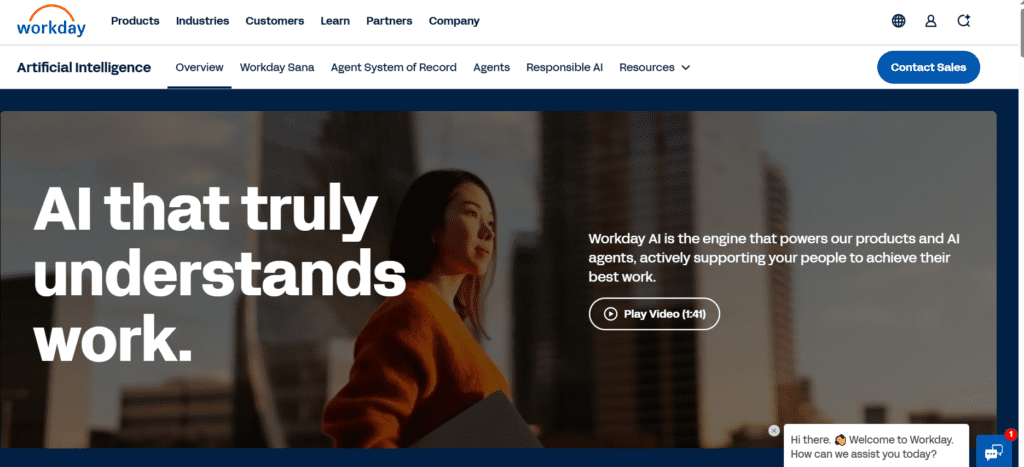
Workday embeds artificial intelligence across recruiting and talent management. It supports candidate matching, resume screening, and workflow automation within its Human Capital Management suite.
Best for
Mid-sized to large enterprises are already using Workday as their core HR system.
Integration depth
Deep native integration across recruiting, payroll, finance, and workforce planning.
Compliance considerations
Enterprise-grade governance, audit trails, and configurable workflows. HR must monitor fairness and model outputs.
Limitations
Requires full platform adoption for maximum value. Implementation can be complex.
Pricing
You need to contact Sales for that.
- Eightfold AI
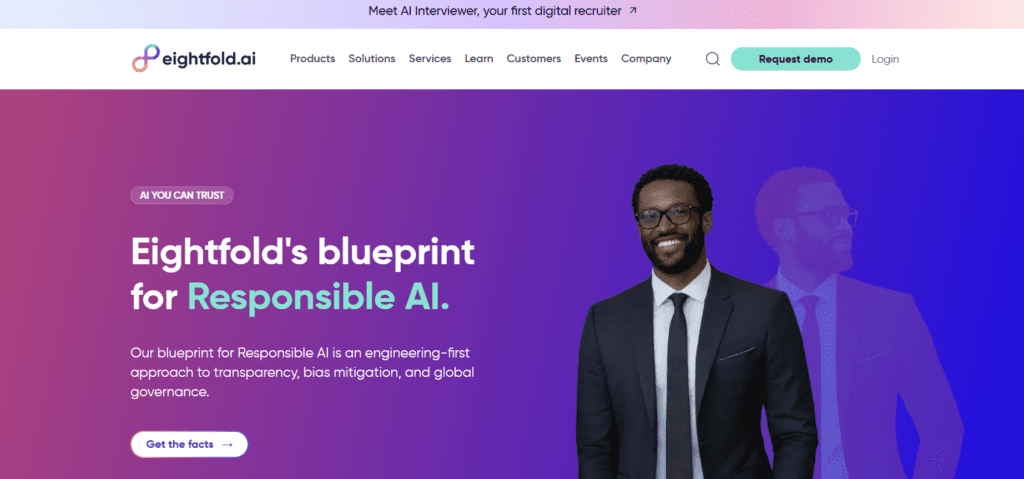
Eightfold uses AI-based skill intelligence to match candidates to roles and identify internal mobility opportunities. It focuses on skills rather than job titles.
Best for
Organizations that are adopting skills-based hiring and workforce planning.
Integration depth
Integrates with existing ATS and HR systems as a talent intelligence layer.
Compliance considerations
HR leaders must validate matching logic and monitor bias risk in automated recommendations.
Limitations
Performance depends on structured, high-quality employee data.
Pricing
You need to schedule a Live Demo with sales.
- HireVue
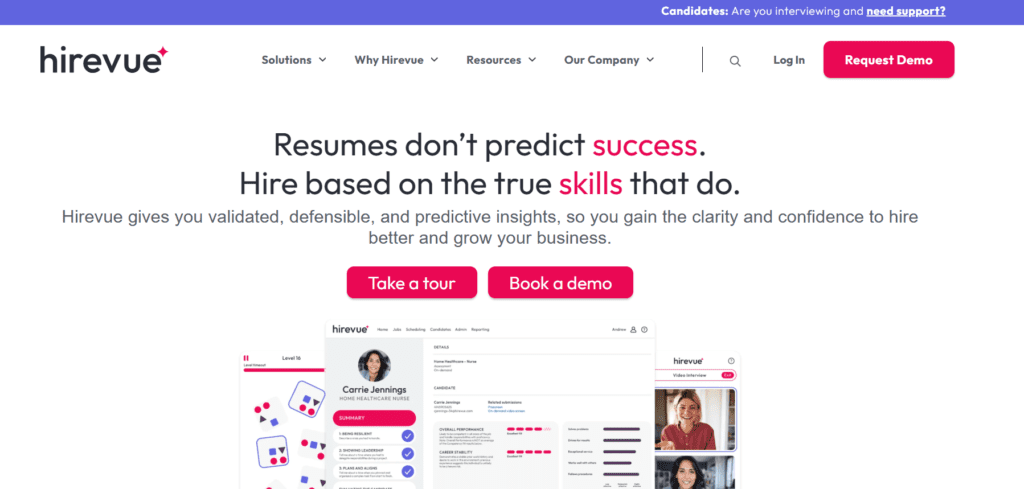
HireVue provides structured digital interviewing tools, including on-demand video interviews and automated scheduling. AI may assist with interview organization and structured evaluation.
Best for
High-volume or geographically distributed hiring environments.
Integration depth
Integrates with common applicant tracking systems.
Compliance considerations
Organizations must comply with local laws governing AI-assisted assessments and candidate data privacy.
Limitations
Not a full talent management suite. Focused on interviewing.
Pricing
You need to request a Demo by filling a form.
- Paradox
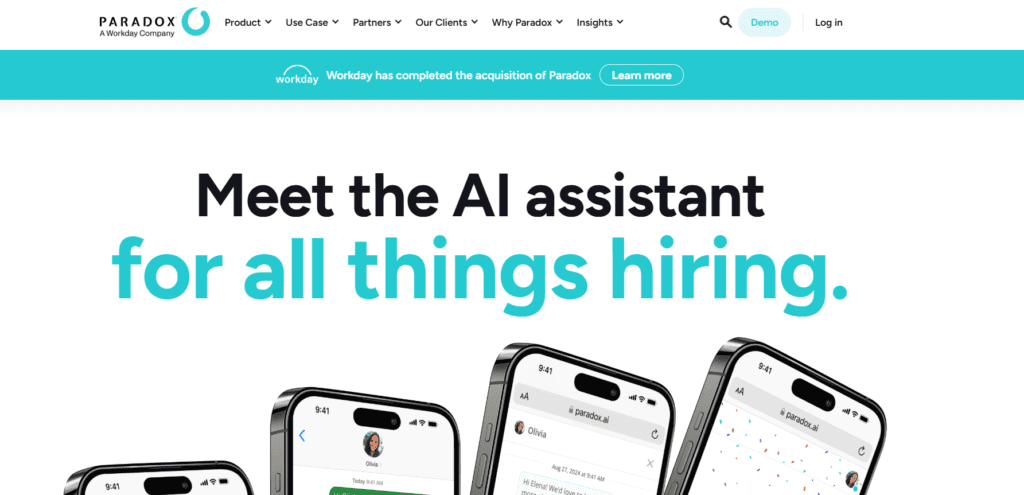
Paradox uses conversational AI assistants to automate interview scheduling, candidate messaging, and recruiting coordination.
Best for
High-volume hiring such as retail, healthcare, and hospitality.
Integration depth
Connects with major ATS platforms to streamline front-end recruiting workflows.
Compliance considerations
Automated communication must comply with hiring and privacy regulations.
Limitations
Focuses primarily on recruiting automation rather than analytics.
Pricing
You can ask for a demo.
Performance Management & Workforce Analytics
- Lattice AI
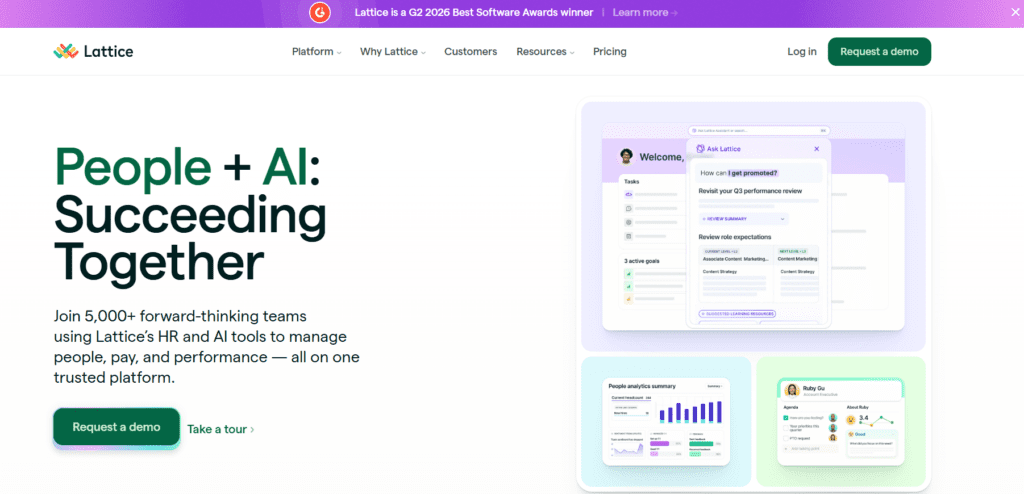
Lattice supports goal tracking, continuous feedback, and structured performance reviews. AI features help summarize feedback and highlight development themes.
Best for
Small to mid-sized organizations are building structured performance management systems.
Integration depth
Integrates with HRIS and workplace collaboration tools.
Compliance considerations
HR must ensure fair evaluation practices and documented review processes.
Limitations
Not a full enterprise HR suite.
Pricing
Talent Management starts from $11/seat/month.
- SAP SuccessFactors
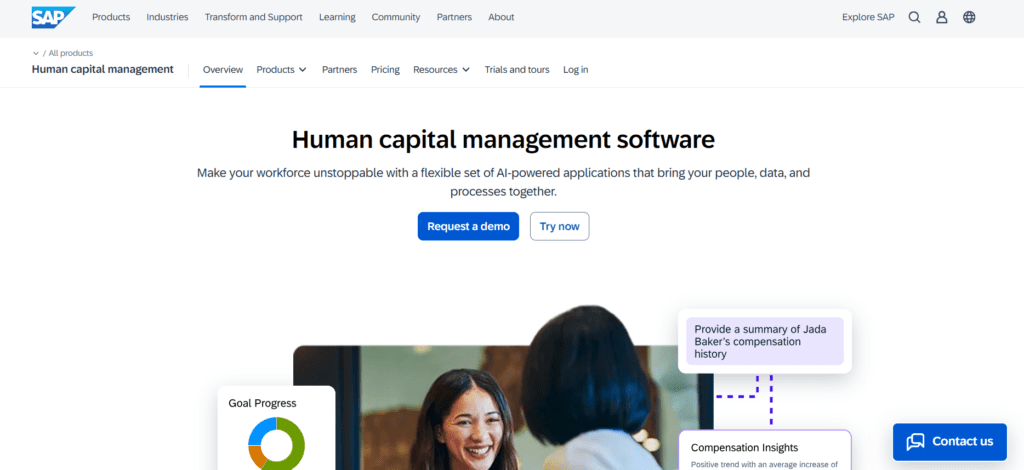
SAP SuccessFactors provides enterprise-level talent management, succession planning, and workforce analytics. AI capabilities support workforce insights and planning.
Best for
Large global organizations with complex workforce structures.
Integration depth
Deep integration across SAP enterprise systems.
Compliance considerations
Designed for multinational regulatory environments. Requires structured governance.
Limitations
Implementation and customization can require significant resources.
Pricing
You need to contact the sales department for complete integration.
- Visier
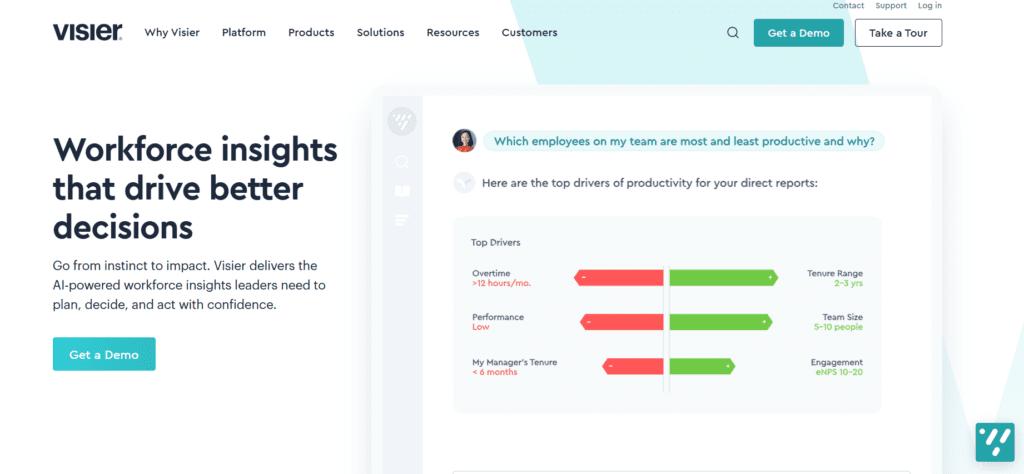
Visier specializes in people analytics. It uses artificial intelligence to analyze employee data for attrition risk, workforce trends, and performance insights.
Best for
Organizations are prioritizing employee engagement analytics and predictive workforce planning.
Integration depth
Connects with existing HR systems to consolidate workforce data.
Compliance considerations
Predictive insights require careful interpretation to avoid bias or misclassification.
Limitations
Focused on analytics rather than payroll or recruiting operations.
Pricing
Contact for demo
HR Operations & Management Platforms
- BambooHR
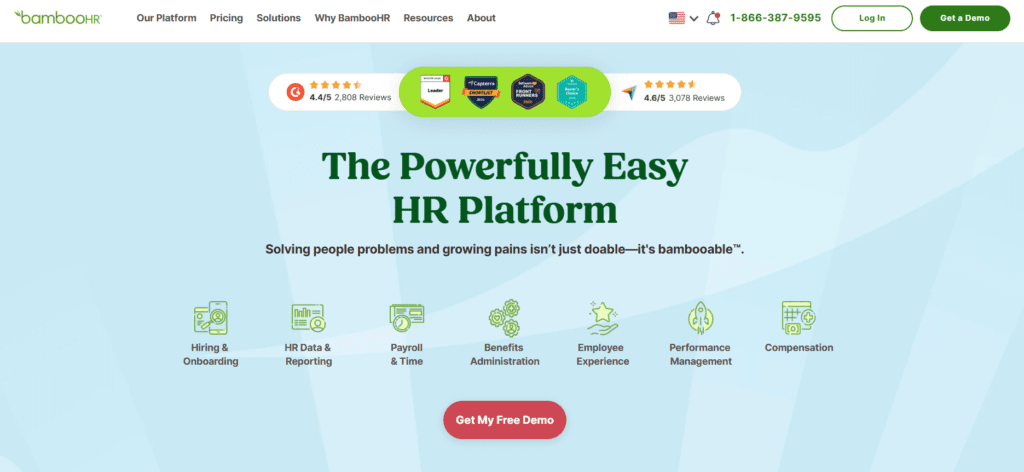
BambooHR provides core HR tools, including employee records, onboarding, reporting, and workflow automation. AI enhancements support data organization and efficiency.
Best for
Small to mid-sized organizations seeking an accessible management platform.
Integration depth
Integrates with payroll, benefits, and third-party HR tools.
Compliance considerations
Supports documentation and compliance workflows. Configuration remains the responsibility of HR.
Limitations
Limited advanced predictive analytics compared to enterprise suites.
Pricing
Starting from $10/employee/Month
- Paycor
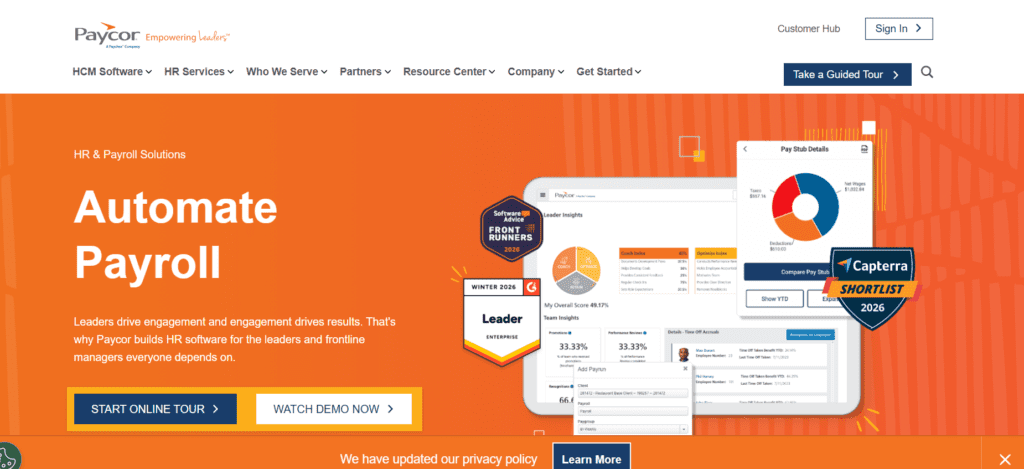
Paycor combines payroll, workforce management, and talent tools. AI assists with reporting, compliance monitoring, and workforce insights.
Best for
Small to mid-sized businesses seeking unified payroll and HR functionality.
Integration depth
An integrated payroll and HR system within one platform.
Compliance considerations
Supports regulatory tracking. HR teams remain responsible for final compliance oversight.
Limitations
Less suited for complex multinational enterprises.
Pricing
Take a guided tour or contact sales for pricing
How can HR Professionals select the Right AI Tool?
Choosing an AI tool is about finding the platform that matches your HR needs, everyday workflows, and long-term strategy.
Each of the AI tools for HR professionals we discussed solves specific problems:
Some are strongest at recruitment and resume screening.
Others focus on performance management, continuous feedback, and employee engagement analytics.
A few help you organize payroll, compliance, benefits, and workforce planning inside a management platform. Knowing what you need first makes the decision easier.
The following are the core factors HR leaders should evaluate:
1. What problem are you solving first?
Look at your biggest bottleneck:
- Is hiring volume slowing you down?
- Are performance reviews inconsistent?
- Do you lack insight into attrition or engagement? Your primary pain point should drive your tool choice.
2. Workforce size and structure
Small and mid-sized teams may benefit from tools that combine core HR tasks (like BambooHR or Paycor). Large enterprises often need deeper analytics and compliance support (like Workday or SAP SuccessFactors).
3. Compliance and governance requirements
If you hire across regions or work in regulated industries, compliance matters. Choose tools that support:
- Audit trails
- Regulatory reporting
- Privacy controls
HR leaders still own policy enforcement, and the tools support you.
4. Existing HR systems and integrations
Your AI solution should fit with your current HR infrastructure. Seamless integration improves adoption and reduces disruption.
Check whether the AI tool connects with your ATS, HRIS, payroll, or collaboration tools.
5. Your AI maturity level
Ask yourself:
- Are you ready for automation only?
- Do you need insight generation and predictive analytics?
Tools differ in sophistication. Start where you are and then scale.
6. Data quality and readiness
AI tools rely on clean, structured employee data. If your data is scattered or inconsistent, even the best AI won’t give reliable insights.
Investing in data hygiene often delivers a bigger impact than adding a new tool.
How to Tell If a Tool Is the Right Fit
Instead of chasing features, focus on fit and measurable outcomes:
- Does it reduce manual work in hiring or reviews?
- Does it give insights you can act on within weeks?
- Will it work within your compliance framework?
- Does your team understand and trust its outputs?
Artificial intelligence works best when it supports your HR strategy. The strongest AI-powered HR systems are those that help you solve real problems, improve workflows, and make better workforce decisions over time.
Risks, Bias and Compliance in AI-Powered HR
AI can improve hiring and workforce insights. But HR remains legally and ethically responsible for every decision the system supports. Efficiency never replaces accountability.
The following is what HR leaders must actively manage:
Algorithmic Bias in Resume Screening
AI learns from historical hiring data. If past decisions favored certain groups, the system can repeat that pattern at scale.
Regulators have already warned employers about this risk. In the U.S., the Equal Employment Opportunity Commission has made clear that companies are responsible for discriminatory outcomes, even when third-party AI tools are involved.
That means HR cannot rely blindly on automated rankings. You must:
- Test hiring outcomes for adverse impact
- Review rejected candidate patterns
- Validate training data quality
- Keep human oversight in final decisions
Explainability Requirements
If you cannot explain why a candidate was rejected, you have a compliance problem.
Modern regulations are moving toward transparency in automated decision-making.
For example, the EU AI Act requires clear documentation and risk controls for high-risk AI systems, including many HR use cases.
HR leaders should prioritize tools that:
- Provide clear scoring logic
- Offer audit reports
- Allow manual review and override
You must be able to justify decisions in plain language to candidates, employees, or regulators.
Data Privacy Regulations
AI in HR processes personal and sensitive employee data. That includes resumes, performance reviews, engagement surveys, and, in some cases, behavioral analytics.
Under laws like the General Data Protection Regulation (GDPR), organizations must:
- Inform individuals how their data is used
- Limit data to specific purposes
- Secure and control access
- Allow individuals to request data access or deletion
Non-compliance can result in significant penalties and reputational damage. More importantly, it breaks employee trust.
HR must ensure vendors meet privacy standards and that internal data governance policies are enforced.
Documentation and Audit Trails
AI decisions cannot operate in the background without records. HR teams should maintain:
- Vendor risk assessments
- Model validation reports
- Bias testing documentation
- Decision logs for hiring or promotion cases
Clear documentation protects your organization during audits, disputes, or regulatory reviews. It also strengthens internal governance.
Ethical Use of Employee Data
Just because AI can analyze behavior does not mean it should. Predictive tools that estimate attrition risk or performance trends must be used carefully. Employees should understand:
- What data is being collected
- Why is it being used
- How it affects decisions
Transparency builds trust. Silent monitoring destroys it. HR leaders must set boundaries, and AI should support workforce strategy without unfair profiling.
The Bottom Line
AI-powered HR systems create opportunity. They also create risk. HR remains the accountable decision-maker.
- You must validate fairness.
- You must protect employee data.
- You must document decisions.
Daily AI Tools Verdict
As an AI tools specialist working closely with HR teams, my advice is simple: approach AI as a strategic partner, not a quick upgrade. The right AI-powered systems can streamline hiring, strengthen performance conversations, and bring clarity to workforce data. But their true value appears only when they align with clear processes, strong governance, and accountable leadership.
In 2026 and beyond, successful HR leaders will not be those who adopt the most tools, but those who implement AI thoughtfully, measure outcomes carefully, and keep HR professional judgment at the core of every decision.
FAQs
1. How does AI help HR teams make better hiring decisions?
AI helps HR teams make better hiring decisions by analyzing resumes, matching skills to job requirements, and identifying qualified candidates faster. It reduces manual screening time and improves consistency in early evaluation stages. HR professionals still make the final hiring decision to ensure fairness, compliance, and cultural alignment.
2. What are the risks of using AI in HR, and how can they be managed?
The main risks of using AI in HR include algorithmic bias, lack of transparency, and data privacy concerns. HR teams can manage these risks by auditing AI outputs, choosing explainable systems, and maintaining human oversight. Clear governance policies ensure responsible and compliant use of AI.
3. Can AI tools improve employee engagement and retention?
AI tools improve employee engagement by analyzing survey feedback, detecting sentiment patterns, and identifying early attrition risks. These insights help HR leaders take proactive steps before employees disengage. AI supports retention strategy but does not replace leadership conversations.
4. What HR tasks should not be automated with AI?
HR tasks that require empathy, ethical judgment, and human context should not be fully automated. This includes conflict resolution, disciplinary actions, career coaching, and sensitive performance discussions. AI should assist with data and documentation, not replace human decision-making.
5. Do AI HR tools replace performance reviews?
AI HR tools do not replace performance reviews; they support them with structured insights. AI can summarize feedback, track goal progress, and highlight performance trends. Managers remain responsible for evaluation conversations and final decisions.
6. How do AI tools protect employee data and privacy?
AI tools protect employee data through encryption, access controls, and compliance with privacy regulations like GDPR. HR must verify how data is stored, processed, and audited. Transparency and documentation ensure ethical use of data.
7. What should HR teams ask vendors before adopting AI tools?
HR teams should ask vendors about data handling, explainability, compliance standards, bias monitoring, and system integration. Clear answers help HR maintain accountability and reduce operational risk. Vendor transparency is essential before implementation.
8. Are AI tools in HR suitable for small businesses?
AI tools in HR are suitable for small businesses when used with clear oversight and governance. Many platforms offer scalable features like resume screening and scheduling automation. Small teams should prioritize data quality and compliance readiness.
9. What is the difference between AI in ATS and AI in performance management systems?
AI in Applicant Tracking Systems (ATS) focuses on hiring efficiency, while AI in performance systems analyzes employee growth and productivity trends. ATS AI screens and ranks candidates. Performance AI evaluates goals, feedback, and engagement metrics.
10. How long does it take to see results from AI HR tools?
Most AI HR tools deliver operational efficiency gains within weeks, particularly in recruitment and reporting. Strategic outcomes such as retention improvements typically require consistent use over several months. Results depend on implementation quality and HR alignment.