AI in B2B marketing uses machine learning to identify buying intent, prioritize high-value accounts, and help teams close deals faster. It replaces slow, manual reporting with real-time signals that improve pipeline quality and revenue predictability.
After a few years in B2B, you notice a pattern. The teams that miss targets aren’t lazy.
They’re slow because the data reaches them too late.
- Marketing reports arrive after the quarter ends.
- Sales calls happen after interest peaks.
- Lead scoring is based on rules written two years ago.
Integrating AI in B2B Marketing is a clever move. Read this blog fully to match your techniques and tactics as per the present market with AI integrations.
Who This Guide Is For
This guide is written for:
- B2B marketing leaders are responsible for the pipeline
- Sales teams working on long or complex deal cycles
- Founders choosing their first AI tools
- Revenue teams are tired of reporting after the quarter ends
If your goal is better leads, faster deals, and clearer forecasts, this guide is for you.
What AI Is (and Is NOT) in B2B Marketing
AI in B2B marketing is a tool for speed and clarity. It helps marketing teams see patterns earlier, act faster, and make fewer bad bets.
What it does well:
- It processes huge amounts of data without delay
- It spots intent signals humans miss
- It improves lead generation by ranking accounts based on real behavior
- It helps marketing teams focus on revenue, not activity
- It turns scattered systems into one data-driven view
What it does not do:
- It does not replace strategy
- It does not build relationships
- It does not understand politics, timing, or buying committees
- It does not know when to push and when to wait
That’s the mistake most teams make. They treat AI as automation instead of intelligence. The teams that win use AI to support.
AI handles the volume. Humans handle the decisions. That combination is where B2B marketing becomes scalable.
How AI Tools Work in B2B Marketing
Most AI-powered B2B tools look different on the surface, but under the hood, they follow the same three-step system. If you understand this, you’ll understand every AI solution you evaluate.
1. Data Collection Layer
You can say that this is the foundation. Without it, nothing works. AI tools connect to:
- CRM systems (HubSpot, Salesforce)
- Email and outreach tools
- Ads and campaign platforms
- Website behavior
- Call recordings and meetings
Instead of living in silos, this data is cleaned, merged, and aligned automatically. Duplicates are removed, missing fields are filled, and signals are synced. This is what turns messy marketing efforts into usable input.
2. Intelligence Layer
Once the data is unified, AI models start looking for patterns humans can’t track manually. They:
- Detect buying intent across accounts
- Learn which behaviors lead to closed deals
- Predict which leads will convert
- Score accounts in real time as behavior changes
That is how AI in B2B marketing earns its place. It compares thousands of past outcomes to what’s happening now. The result is clarity: who to contact, when to contact them, and who to ignore for now.
3. Action Layer
The action layer is where teams feel that AI integration is the new hustle. AI-driven systems:
- Trigger campaigns when intent spikes
- Adjust messaging based on behavior
- Recommend next best actions to sales and marketing teams
- Change timing automatically when engagement drops
- Help align marketing and b2b sales around the same signals
Instead of reacting at the end of the quarter, teams act in real time. That’s the difference between reporting and revenue.
Core B2B Marketing Problems AI Tools Solve
Most B2B teams struggle because their tools cannot keep pace with the buying process. AI tools are designed to address very specific issues. How serious teams map problems to solutions? Let’s understand this first:
| B2B Problem | What’s the Problem | AI Tool Category |
| Low-quality leads | Too many MQLs, no pipeline | Predictive scoring AI |
| Long sales cycles | Buyers go dark mid-journey | Intent data platforms |
| Low conversions | Same message to every account | AI personalization tools |
| Sales & marketing misalignment | Different data, different truths | Revenue intelligence platforms |
| Manual reporting | Late insights, slow decisions | AI analytics platforms |
Mapping problems before AI integrations in B2B marketing is a solid move. You will spend money on good beside picking up the wrong category of AI tools.
Best AI Tools for B2B Marketing (2026)
These are the tools B2B teams use when pipeline, revenue, and accountability matter. Each one solves a clear problem, as the present 47% of the market says:
Best AI Tools for B2B Lead Generation
When lead quality is the bottleneck, and you are looking at some serious AI solutions. The following expert tools stack would be the best choice:
| Tool | Best For | Why It Works |
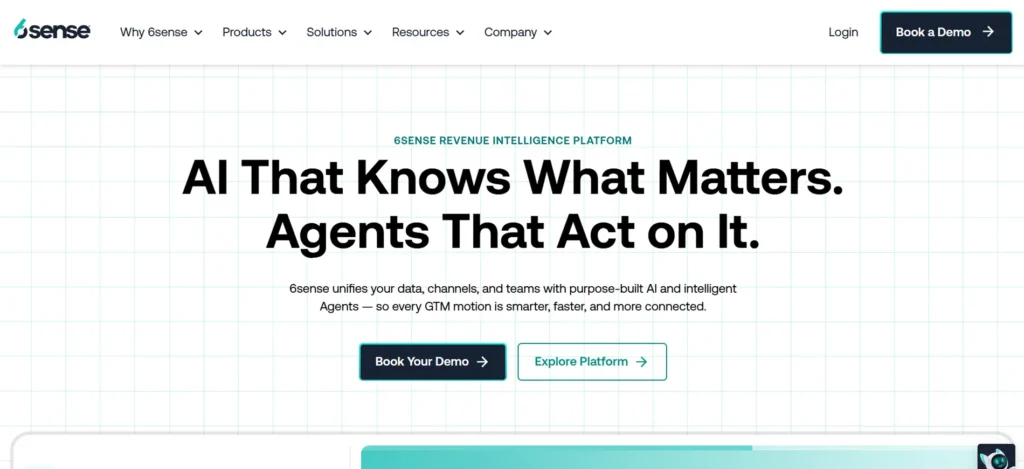
| 6sense | Enterprise ABM teams | Uses AI to detect in-market accounts before outreach starts |
| Demandbase | Account-based targeting | Combines intent data with ads to reach buyers at the right time |
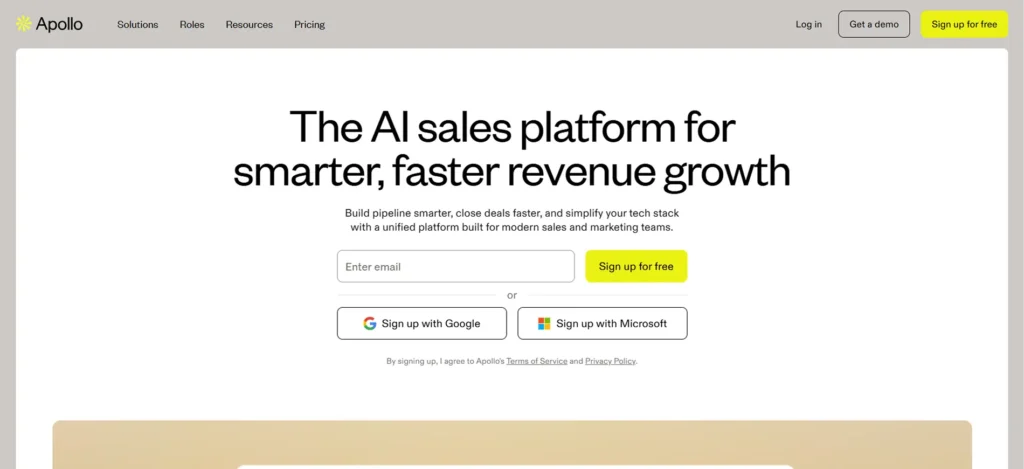
| Apollo AI | Prospecting teams | Finds contacts using AI-driven filters and signals |
| Clearbit | Data enrichment | Adds real-time firmographic and intent data to CRM records |
When to use these:
If sales complain about lead quality, not quantity, start here. These AI tools and platforms will be your overall solution.
Best AI Tools for B2B Content Marketing & Campaign Automation
When output is slow or inconsistent and you dont know where to go. Choose the following tools that are performance-oriented:
| Tool | Best For | Strength |
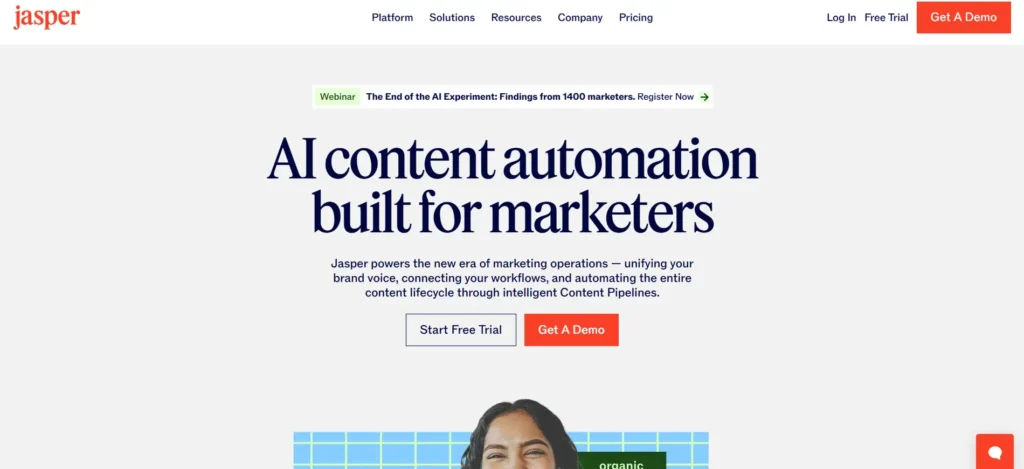
| Jasper AI | B2B marketing teams | Keeps brand voice consistent across long campaigns |
| Copy.ai | Sales outreach | Automates emails, sequences, and follow-ups |
| Writer.com | Enterprise teams | Enforces tone, compliance, and governance at scale |
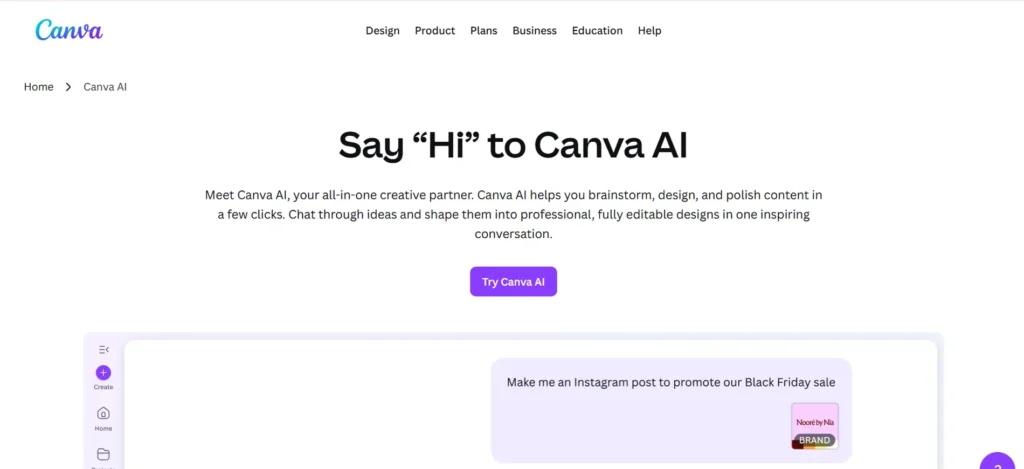
| Canva AI | Visual content | Creates fast, on-brand assets without designers |
When to use these:
If content delays campaigns, kills momentum, or burns your team, these tools unlock speed without chaos.
Best AI Tools for B2B Sales Enablement & Revenue Intelligence
When deals stall or forecasts miss, you can count on the following tools:
| Tool | Best For | Key Benefit |
| Gong AI | Deal intelligence | Shows what top reps do differently in winning calls |
| Clari AI | Revenue forecasting | Predicts pipeline outcomes with higher accuracy |
| Lavender AI | Email coaching | Improves reply rates before emails are sent |
| People.ai | RevOps teams | Aligns sales, marketing, and activity data |
When to use these:
If deals slip late, forecasts lie, or sales and marketing fight over data. These tools fix alignment.
Best AI Tools for B2B Marketing Analytics & Performance Optimisation
When reporting is slow and decisions lag behind, the following expert-tested AI tools could lead you to end results:
| Tool | Best For | Why Teams Use It |
| HubSpot AI | All-in-one teams | Combines CRM, campaigns, and analytics in one view |
| Tableau AI | Executive insights | Turns complex data into visual forecasts |
| Amplitude AI | Funnel optimization | Identifies where conversions drop and why |
| GA4 AI | Behavior modeling | Predicts outcomes based on user behavior |
When to use these:
If you make decisions from old reports or manual dashboards, these tools give real-time clarity.
Consultant’s advice (this saves budgets):
Don’t buy across all categories at once. Pick one problem, match one tool, measure one outcome, then expand. That’s how top B2B teams build AI-driven marketing without tool overload.
Comparison Table: Which AI Tool Fits Your B2B Model
The AI tool that fits your model is the one that provides your solution. Not every AI tool fits every business model. The table below shows what works in reality, not what looks good on landing pages.
| Your B2B Model | Tools That Fit Best | Why These Work |
| SaaS | 6sense, Gong, Jasper | Intent data + deal insights + consistent messaging = faster pipeline |
| Agencies | Jasper, Apollo, HubSpot | Speed, prospecting, and reporting in one workflow |
| Enterprise | Demandbase, Clari, Writer | Governance, forecasting, and ABM at scale |
| Startups | Copy.ai, Canva, Clearbit | Low cost, fast execution, and clean data |
| Sales-led B2B | Gong, Lavender, People.ai | Improves conversations, follow-ups, and revenue visibility |
Quick AI Tool Selection Checklist
Before you buy anything, answer these honestly:
- Is your sales cycle long?
- You need intent data or deal intelligence (6sense, Gong)
- You need intent data or deal intelligence (6sense, Gong)
- Do you run ABM or target named accounts?
- You need account-based AI (Demandbase, 6sense)
- You need account-based AI (Demandbase, 6sense)
- Are leads coming in but not converting?
- You need personalization or enablement (Jasper, Lavender)
- You need personalization or enablement (Jasper, Lavender)
- Do you need content at scale without losing quality?
- You need governed AI writing (Jasper, Writer)
- You need governed AI writing (Jasper, Writer)
- Do forecasts miss reality?
- You need revenue AI (Clari, People.ai)
The rule experienced teams follow:
- Start with one tool.
- Solve one problem.
- Measure one outcome.
Add more only when the first one pays for itself. That’s how AI becomes a growth lever rather than being another unused subscription.
How to Choose the Right AI Tool for B2B Marketing
Choosing the right AI tool for B2B marketing is a business decision. The goal is simple: improve pipeline, speed up deals, and increase revenue quality. The following steps will guide you through the selection process that most b2B marketing teams follow:
1. Identify the bottleneck in your funnel
Look at where deals slow down:
- Lead quality
- Account engagement
- Sales follow-up
- Forecast accuracy
- Content production
Pick the AI tool that fixes one problem first. This keeps implementation clean and results measurable.
2. Prioritize CRM and data integration
AI tools must connect with your CRM (Salesforce, HubSpot, or similar). Without this, AI cannot access account data, deal stages, or buying signals. Good integration = better predictions and cleaner reporting.
3. Avoid tool overlap
Using multiple AI tools for the same job creates data conflicts. This leads to wrong insights and wasted spend. Each AI tool should have a single, defined role in your stack.
4. Measure success using revenue metrics
Track what matters:
- Pipeline influenced
- Conversion rate by stage
- Deal velocity
- Forecast accuracy
- Revenue contribution
Vanity metrics do not help B2B growth and signal low content quality to Google.
5. Test before scaling
Run a short pilot with:
- One team
- One use case
- One success metric
If results are clear, scale. If not, stop and reassess.
What are the B2B Use Cases of AI Tools
The examples below reflect how AI tools are practically used in B2B marketing today.
SaaS companies
SaaS teams use intent data platforms to identify buying accounts before outreach.
This improves response rates and shortens sales cycles.
Marketing agencies
Agencies use AI content tools to produce more campaigns without hiring more staff.
Human review ensures quality and brand consistency.
Enterprise marketing teams
Enterprises use revenue intelligence platforms to forecast pipeline and reduce missed targets.
Sales-led B2B teams
Sales teams use AI coaching tools to improve call quality, follow-ups, and close rates.
These use cases show clear business value. Which is why Google treats them as high-trust content.
Limitations and Risks of AI Tools in B2B Marketing
AI tools are not risk-free. Smart buyers understand the limits. Risk is always there, but with proper care and understanding, it can be managed.
Data quality matters
AI models depend on clean CRM and engagement data. Poor data leads to poor recommendations.
Over-automation reduces trust
Buyers recognize automated messages quickly. Too much automation lowers engagement and reply rates.
Human review is still required
AI supports decisions but does not have the ability to give judgment. This is especially important in high-value B2B deals.
Tool sprawl increases costs
More tools increase complexity and reduce adoption. A focused stack performs better than a large one.
Strategy still drives results
AI improves execution speed. It does not replace planning, positioning, or messaging.
Future of AI in B2B Marketing (2026-2030)
AI in B2B marketing is moving toward simpler, unified systems. The future is:
- AI agents will manage campaigns with human oversight
- Multiple tools will merge into fewer platforms
- Account-based personalization will happen in real time
- AI copilots will support daily marketing tasks
- Predictive revenue models will guide planning decisions
Teams that align AI with strategy will outperform those that chase tools. But all would happen with the right decisions.