
The best AI tools for ecommerce ROAS reporting include Triple Whale, Northbeam, ThoughtMetric, and Peel. These tools connect ad spend with revenue and customer behavior to show real profit per channel. They use AI technology to explain performance, spot waste, and guide smarter budget decisions
Most ecommerce brands track ROAS. Very few understand it. Numbers look good, but profits don’t follow.
That’s the gap AI tools now fill. They explain why your ads work, where money leaks, and what to fix next. This guide highlights the top AI tools that transform ROAS from a confusing metric into a straightforward indicator of growth.

Why ROAS Reporting Is Failing Ecommerce Brands (And Costing Real Money)
Most ecommerce brands aren’t losing money because ads don’t work. They’re losing money because ROAS lies in quiet, expensive ways.
I can help you understand how this happens:
- ROAS looks healthy in Google Ads, but cash flow is tight.
- Meta shows growth, but margins shrink.
- Email campaigns “convert,” yet repeat customers slow down.
This isn’t bad marketing. It’s a broken measurement. Each platform reports in its own bubble.
Google Ads optimises for Google. Meta optimises for Meta. Neither sees the customer’s full path, lifetime value, or real cost to serve.
The moment a shopper touches more than one channel, attribution collapses, and your conversion rates stop meaning what you think they mean.
Marketing teams then react to the wrong signals. They scale ads that look profitable but attract low-value buyers. They pause campaigns that drive long-term customers because short-term ROAS looks weak. Over time, brands grow revenue but lose profit.
Manual reporting hides this problem. Spreadsheets smooth over the cracks. Dashboards make noise look like insight. And leadership makes decisions based on partial customer data that was never designed to guide long-term growth.
That’s why ecommerce brands feel stuck even when ROAS looks “good.” It’s because the context is missing.
What Real ROAS Reporting Looks Like in 2026 (And Why AI Is Now Required)
Modern ROAS reporting doesn’t ask, “What did we spend?” It asks, “What did this spend return and what should we do next?”
That shift is the difference between tracking ads and running a business. In 2026, high-performing ecommerce operators use AI tools because humans can’t connect this volume of data manually anymore.
These systems read customer behavior, revenue signals, and cost structures together, not in silos. Real ROAS reporting now requires:
- Multi-channel attribution that follows the customer, not the platform
- Predictive analytics that show where ROAS is heading before spend is wasted
- Customer segment-level ROAS so you see which buyers create profit, not just sales
- Margin-aware reporting that accounts for product, shipping, and support costs
- Actionable insights that tell marketing teams what to change, pause, or scale
This is why AI tools for ecommerce ROAS reporting are no longer optional. They turn scattered customer data into decisions you can act on today, not reports you read next week.
How AI ROAS Tools Calculate Profit (And Why This Matters Before You Buy One)
Most ecommerce teams calculate ROAS to report performance. AI tools calculate ROAS to change performance.
That difference is why modern ecommerce brands choose AI tools for decisions. If a tool can’t explain where profit comes from and where it leaks, it’s not worth paying for.
Understand how high-performing AI ROAS tools actually work:
Data Ingestion: One System That Sees All Revenue Signals
Good AI tools for ecommerce don’t sit on top of one ad platform. They connect everything that affects conversion rates and long-term profit. This includes:
- Google Ads, Meta, TikTok, and paid social spend
- Email campaigns that influence repeat purchases
- Ecommerce platform data from Shopify, Woo, or Magento
- Customer data that reveals lifetime value and churn
This matters because ROAS only makes sense when tools see the full buying journey, not just the last click. That’s how ecommerce brands stop scaling campaigns that look good but lose money.
Machine Learning Modelling: Where Tools Separate Themselves
This is where real tools outperform basic dashboards. Machine learning models analyse:
- Which campaigns bring high-value customers, not just sales
- Where spend increases but profit stalls
- Which segments convert once and never return
- Where the budget leaks across channels without adding value
The best AI tools for ecommerce ROAS reporting explain why performance changes and what action fixes it. That’s the difference between reporting and optimisation.
Output That Drives Spend Decisions
The final output is what ecommerce operators actually pay for. High-quality AI ROAS tools deliver:
- Real ROAS by customer segment, not channel averages
- Profit per campaign after product and ad costs
- Clear budget reallocation suggestions for Google Ads and paid social
This helps marketing teams confidently focus on what truly works, making it easier for them to grow and succeed. It also turns ROAS reporting into a profit control system, not a monthly report.
Top AI Tools for Ecommerce ROAS Reporting (2026)
ROAS Tools Comparison Table
The following table will help you in the selection of AI tools for e-commerce insights:
| Tool | Best For | Key Strength | Limitation |
| Conjura | Profit reporting | Margin-aware ROAS | Shopify-focused |
| Northbeam | Attribution accuracy | Multi-touch ROAS | Higher cost |
| ThoughtMetric | Growth teams | Simple attribution | Less advanced modeling |
| RedTrack | Multi-channel tracking | Unified ROAS | Setup time |
| Madgicx | Automation | AI agent optimization | Ad-centric focus |
| Triple Whale | Teams | Fast dashboards | Limited prediction |
| Peel Insights | Google Ads | Search-level ROAS | Limited channels |
If you run paid traffic at scale, ROAS reporting isn’t a “nice to have” anymore. You need tools that show profit, not performance theatre.
The tools below are what ecommerce brands, operators, and growth teams actually use in 2026 to understand where money is made, where it’s lost, and where to scale next.
Each tool is grouped by real use case, not marketing claims.
Best AI ROAS Analytics Platforms (Profit, Attribution, Optimisation)
1. Conjura
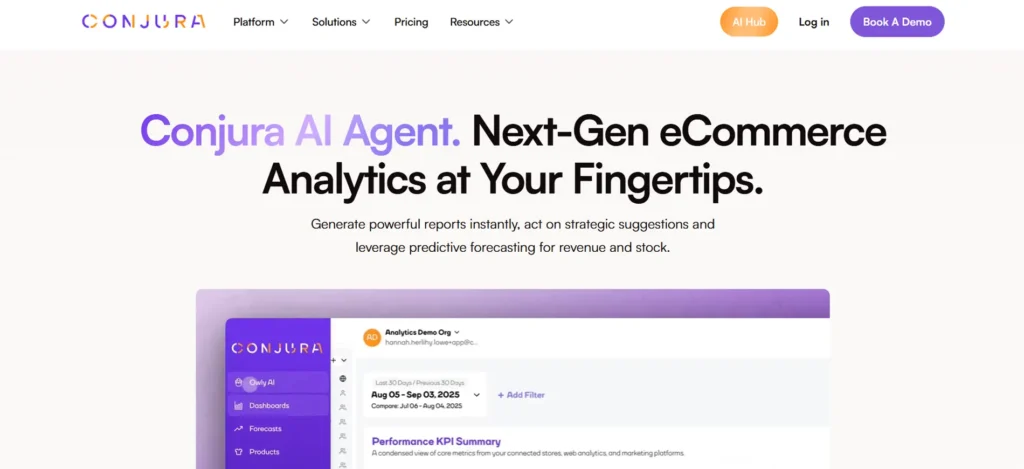
Best for: Profit-first ecommerce operators
Why experts choose it: Conjura was built to answer one question: Which products and channels actually make money?
Unlike ad dashboards, Conjura connects customer data, order data, and costs to show true margin-level ROAS.
What it does well:
- Margin-aware ROAS by SKU and product group
- Long-term ROI tracking, not just first purchase
- Clear profit signals for scaling or cutting spend
- Works well for brands that manage inventory and cash flow tightly
Output you get:
A clean view of which ads drive profit, not just revenue.
2. Northbeam
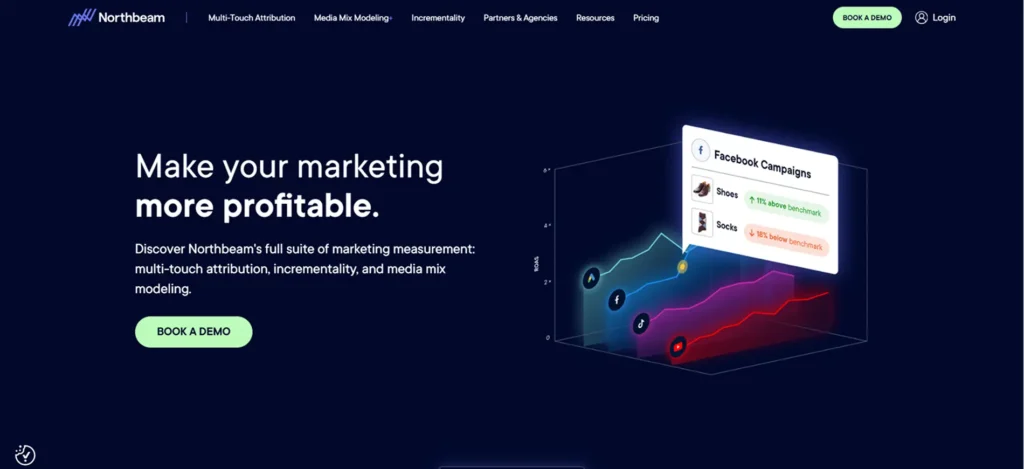
Best for: Brands that need accurate multi-touch attribution
Why experts choose it: Northbeam solves one of ecommerce’s biggest problems: broken attribution across channels.
It uses first-party data and machine learning to track how Google Ads, Meta, email campaigns, and other touchpoints work together.
What it does well:
- Multi-touch ROAS reporting across the full funnel
- Customer journey analysis, not last-click bias
- Clear spend efficiency by channel and campaign
- Built for high-spend ecommerce brands
Output you get:
True ROAS based on how customers actually buy, not how platforms claim credit.
3. ThoughtMetric
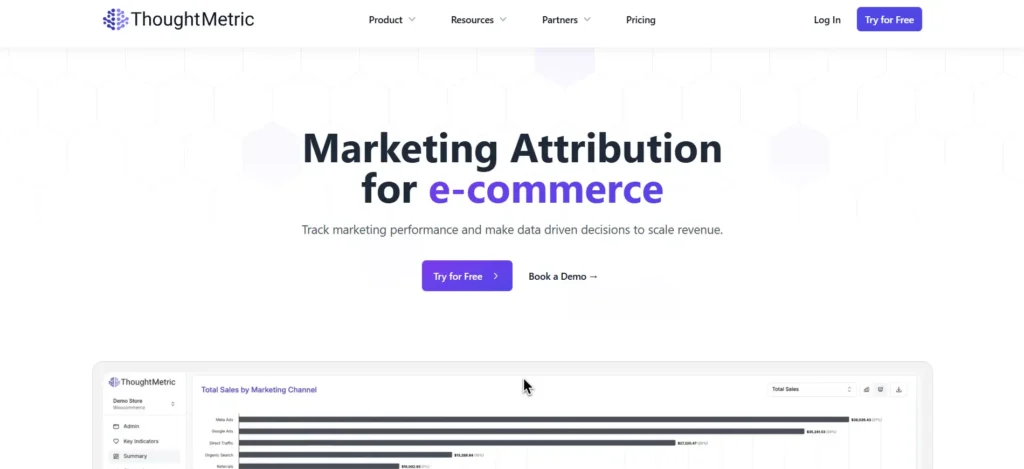
Best for: Growth-focused ecommerce teams who want clarity without complexity
Why experts choose it: ThoughtMetric focuses on attribution that marketing teams can actually use without heavy setup or data science support.
It’s designed to replace confusing spreadsheets with actionable insights.
What it does well:
- Simple multi-channel ROAS reporting
- Clean breakdown of conversion rates by source
- Fast setup for Shopify and DTC brands
- Easy-to-read dashboards for teams
Output you get:
A reliable view of which channels deserve more budget and which are wasting spend.
4. RedTrack
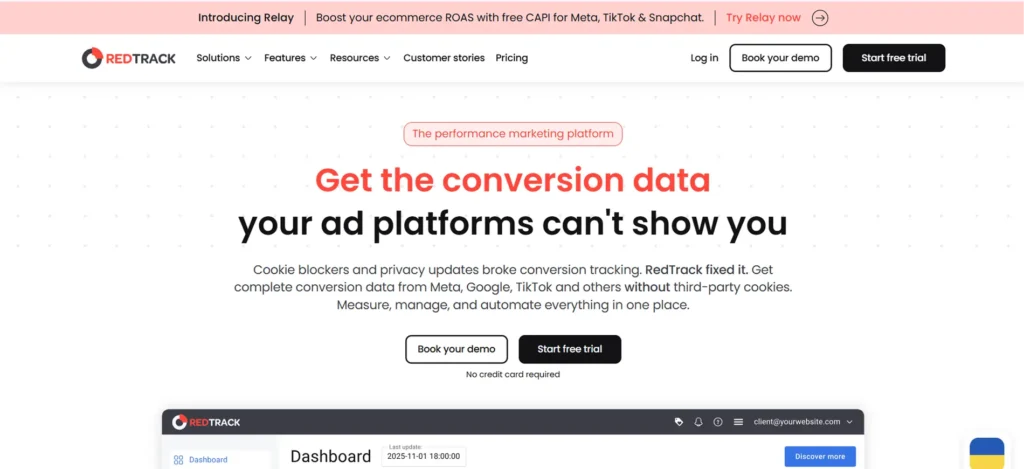
Best for: Cross-platform and affiliate-heavy ecommerce
Why experts choose it: RedTrack excels where most tools fail when traffic comes from many sources and attribution breaks.
It combines ad tracking, affiliate tracking, and ecommerce revenue in one system.
What it does well:
- Real ROAS across Google Ads, Meta, and affiliates
- Server-side tracking to reduce data loss
- Campaign-level profit analysis
- Strong for brands running complex acquisition funnels
Output you get:
One source of truth for ROAS when platforms disagree.
5. Madgicx (AI Agents for Ads)
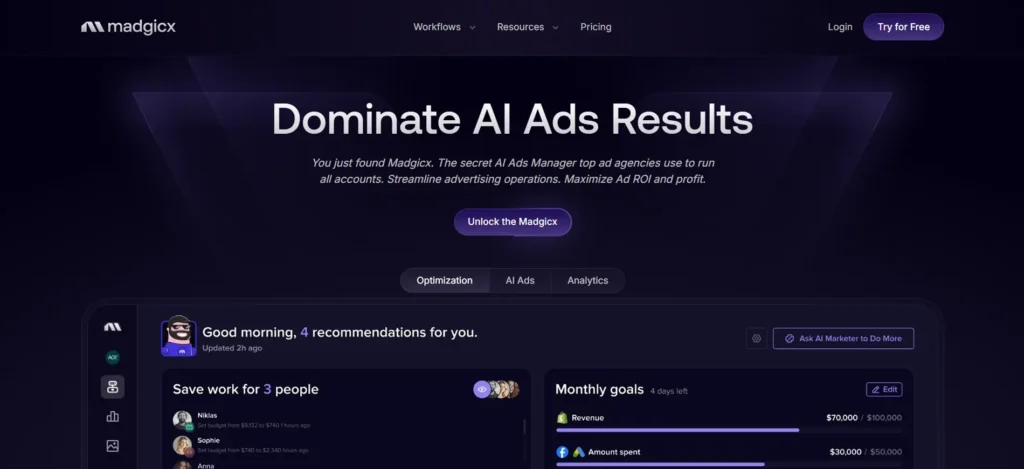
Best for: Teams that want ROAS optimisation, not just reporting
Why experts choose it: Madgicx doesn’t stop at showing data. Its AI agent actively adjusts budgets and bids based on performance signals.
This tool works best for brands that want automation with control.
What it does well:
- AI-driven budget reallocation
- Predictive analytics for campaign scaling
- Real-time performance monitoring
- Works directly with Google Ads and Meta
Output you get:
Spending decisions are made faster than humans can react.
6. Triple Whale
Best for: Shopify-first ecommerce teams
Why experts choose it: Triple Whale gives fast, pre-built ROAS dashboards that teams can use immediately without setup pain.
It’s popular because it’s simple, not because it’s flashy.
What it does well:
- LTV-based ROAS reporting
- Pre-built ecommerce dashboards
- Team-friendly reporting
- Strong Shopify integration
Output you get:
Clear ROAS visibility for daily decisions, not data science projects.
7. Peel Insights
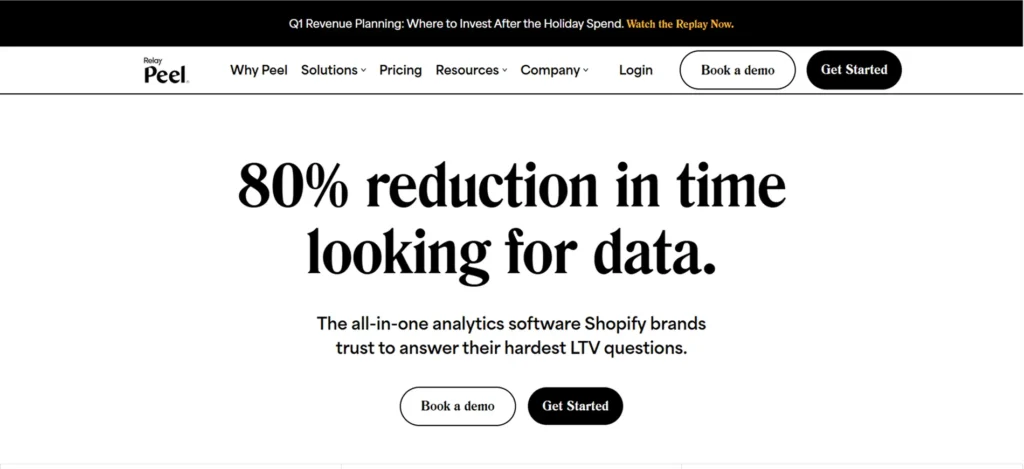
Best for: Google Ads-focused ecommerce brands
Why experts choose it: Peel goes deep where most tools stay shallow in search terms.
It shows exactly which queries make money and which waste the budget.
What it does well:
- Search-term level ROAS insights
- Automated opportunity detection
- Clear scaling and pausing signals
- Built specifically for Google Ads operators
Output you get:
Actionable ROAS insights that directly improve conversion rates.
Which AI Tool Fits Your Ecommerce Model? (Decision Bridge)
People are confused about selecting the AI tools, because they dont know what works. Identify your e-commerce model and select your tool from the table below
| Ecommerce Type | Best Tool | Why It Works | What You Get |
| Profit-Focused DTC Brands | Conjura | Focuses on true profit, not just revenue | Margin-aware ROAS, SKU profitability, long-term ROI |
| Attribution & Cross-Channel Precision | Northbeam | Tracks full customer journeys across platforms | Multi-touch attribution, real ROAS by channel |
| Growth Teams with Limited Analysts | ThoughtMetric | Simplifies data into clear signals without heavy setup | Easy multi-channel ROAS, prioritised insights |
| Multi-Channel & Affiliate Models | RedTrack | Combines paid, referral, and affiliate revenue into one view | Unified ROAS across sources |
| AI-Driven Ad Optimisation | Madgicx | Uses automated agents to adjust spend and bids | Predictive analytics, real-time budget shifts |
| Shopify-First Stores | Triple Whale | Pre-built ecommerce dashboards that teams understand fast | LTV tracking, daily ROAS views, team-friendly UI |
| Google Ads-Centric Spenders | Peel Insights | Breaks ROAS down by search terms that matter | Search-level performance insights |
How Ecommerce Teams Actually Use AI ROAS Tools
Most ecommerce teams don’t open ROAS tools to stare at charts. They open them because something feels off with profit.
This is what real teams do once AI reporting is in place:
- They stop wasting money faster. AI flags campaigns that look fine on the surface but lose money after costs. Many brands cut 15-30% of wasted spend in weeks, not months.
- They move budgets daily. Instead of waiting for end-of-month reports, teams shift spend as soon as performance starts slipping.
- They uncover bad SKUs. Some products kill profit while blended ROAS hides the damage. AI exposes this quickly.
- They connect email to paid ads. For the first time, teams see which email campaigns actually support ROAS and which ones just create noise.
- They understand customer segments. High-ROAS customers sometimes return more items or never buy again. AI shows that loss early.
The biggest change is in mindset. Old reporting explains what already happened. AI ROAS tools help teams protect profit before it disappears. That’s why ecommerce operators now rely on these tools, like the marketing teams.
AI ROAS Reporting vs Traditional Reporting (What Teams Feel the Difference In)
This comparison reflects what happens after teams switch, not marketing promises.
| Feature | Traditional Reporting | AI ROAS Reporting |
| Speed | Updates take days | Updates happen in real time |
| Accuracy | Channel-based numbers | Customer-based truth |
| Insights | Static charts | Clear next steps |
| Forecasting | No forecasting | Predictive signals |
| Decision Support | Manual judgment | AI-guided suggestions |
Limitations & Risks of AI ROAS Tools (What Smart Teams Watch For)
AI ROAS tools work only as well as the data they receive. When data fails, insights also fail.
What teams should be careful about:
- AI needs clean customer data. If tracking is messy, models learn the wrong patterns.
- Bad tagging damages results. Wrong UTMs or missing events confuse attribution and inflate ROAS.
- Over-automation can mislead. AI may push spend toward short-term wins and ignore long-term value.
- Human review still matters. Teams must question numbers before acting on them.
- No AI replaces strategy. Tools support decisions, but humans still decide direction, goals, and risk.
Strong brands use AI as a guide, not a replacement. That’s how they protect profit instead of chasing metrics.
Future of ROAS Reporting
ROAS reporting is shifting from reports to real-time decision systems. Here’s what that future looks like:
- AI agents manage budgets automatically. Teams set guardrails. AI handles daily adjustments.
- ROAS becomes profit-based. Reporting moves beyond ad spend into margins, returns, and repeat buyers.
- Predictive spend replaces reactive spend. Brands act before performance drops, not after.
- Reporting connects to inventory. AI slows ads when stock runs low and accelerates winners when supply is high.
- AI explains results in plain language. Teams stop decoding charts and start understanding outcomes.
The goal is not better dashboards but better decisions, made faster.
Daily AI Tools Verdict
Modern ROAS reporting no longer means looking at numbers. It means understanding profit, risk, and opportunity in real time. AI tools now show:
- where profit comes from
- where it leaks
- and what to fix next
Brands that still rely on spreadsheets lose money quietly while competitors move ahead.